A Safari Built
Around the Migration
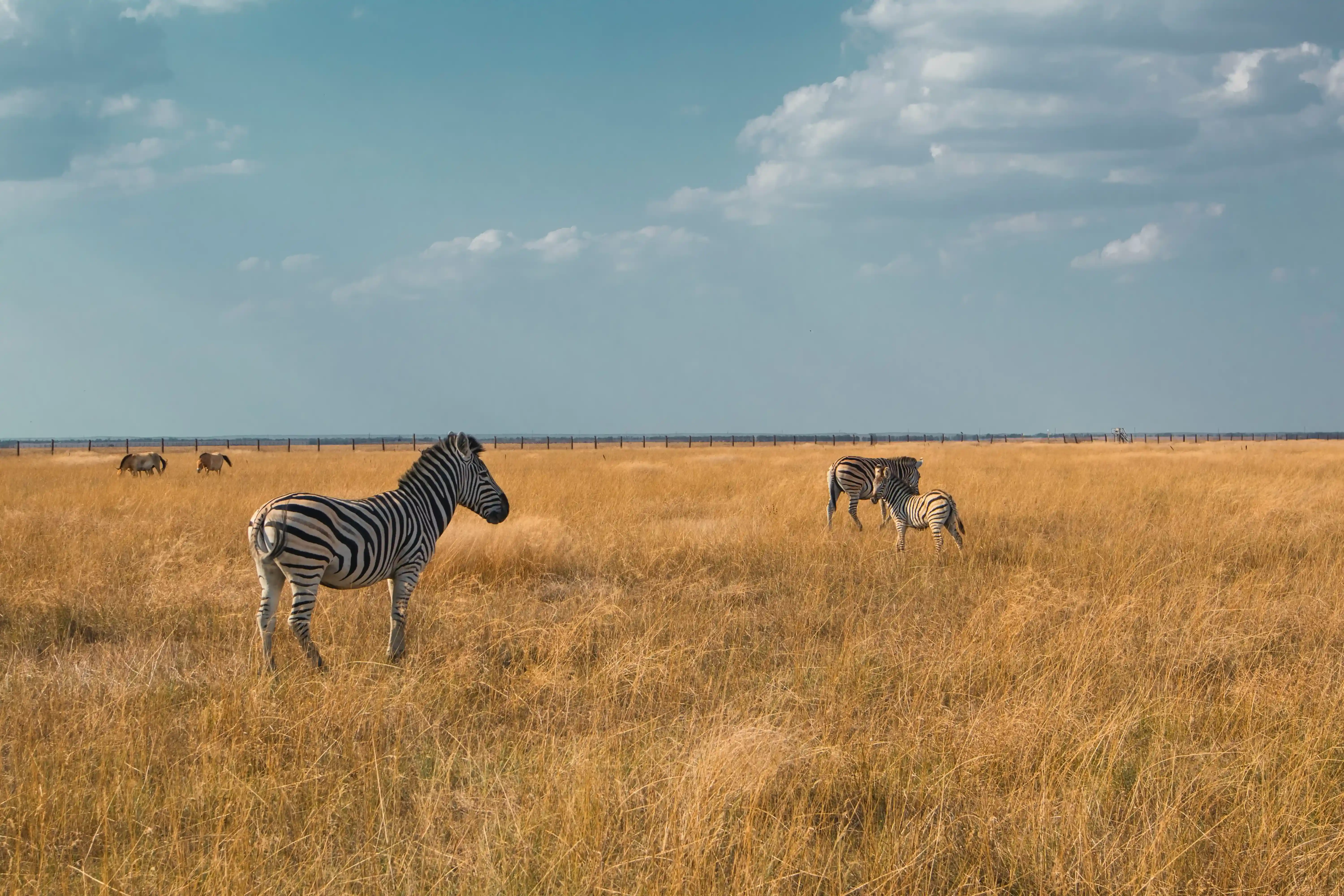
The Great Migration is one of nature’s most extraordinary spectacles — over 1.5 million wildebeest, 250,000 zebra, and 500,000 Thomson’s gazelle moving in a vast clockwise circuit through the Serengeti and Maasai Mara. No two journeys are alike, because the migration is alive, unpredictable, and shaped by rain.
We design your route around the season: January–March means the calving grounds of the Southern Serengeti, where thousands of calves are born daily and predators hunt in the open. July–October brings the legendary Mara River crossings in the north — one of the most dramatic wildlife events on earth. Every detail, every camp, every road is chosen to give you the best possible encounter.
“The best trips feel effortless because the details are handled before you arrive. We build the route carefully, then let Tanzania do what it does best.”
— Africa Endless Cruising TeamBest time to visit: June–October for the dry season and dramatic Mara River crossings. January–March for calving season and dense predator action on the short-grass plains.
When to Follow
the Migration
The Suggested
Itinerary
Arusha or Moshi → Ngorongoro Highlands
Your Tanzania adventure begins with a private transfer from Arusha or Kilimanjaro International Airport. The road west rises through lush Maasai highland villages and coffee farms before cresting the Ngorongoro Crater rim at over 2,300 m. En route your guide introduces the landscape, the wildlife cycle, and what to expect in the days ahead. Settle into your highland lodge as the last light turns the crater walls amber.
Ngorongoro Crater Floor → Serengeti
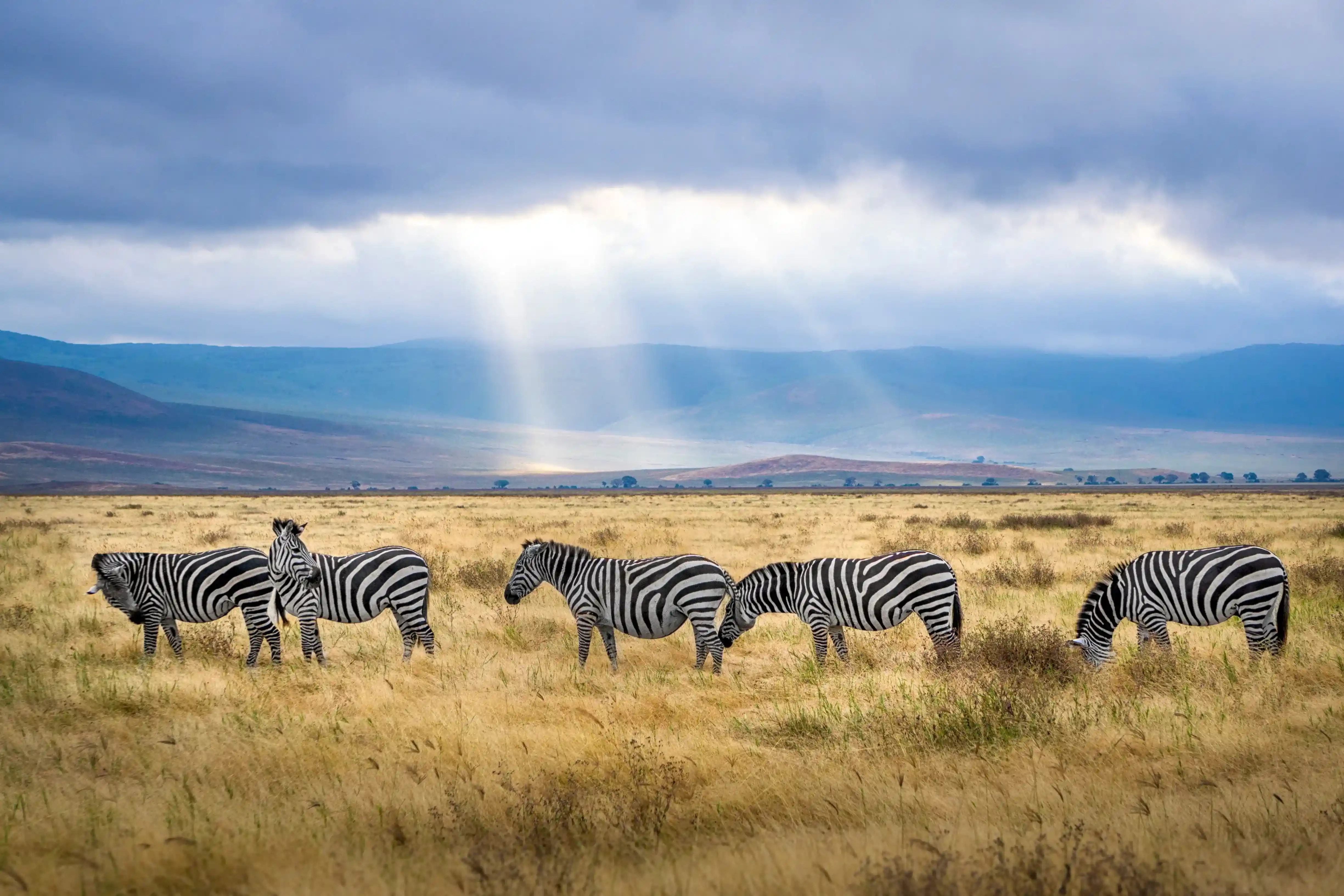
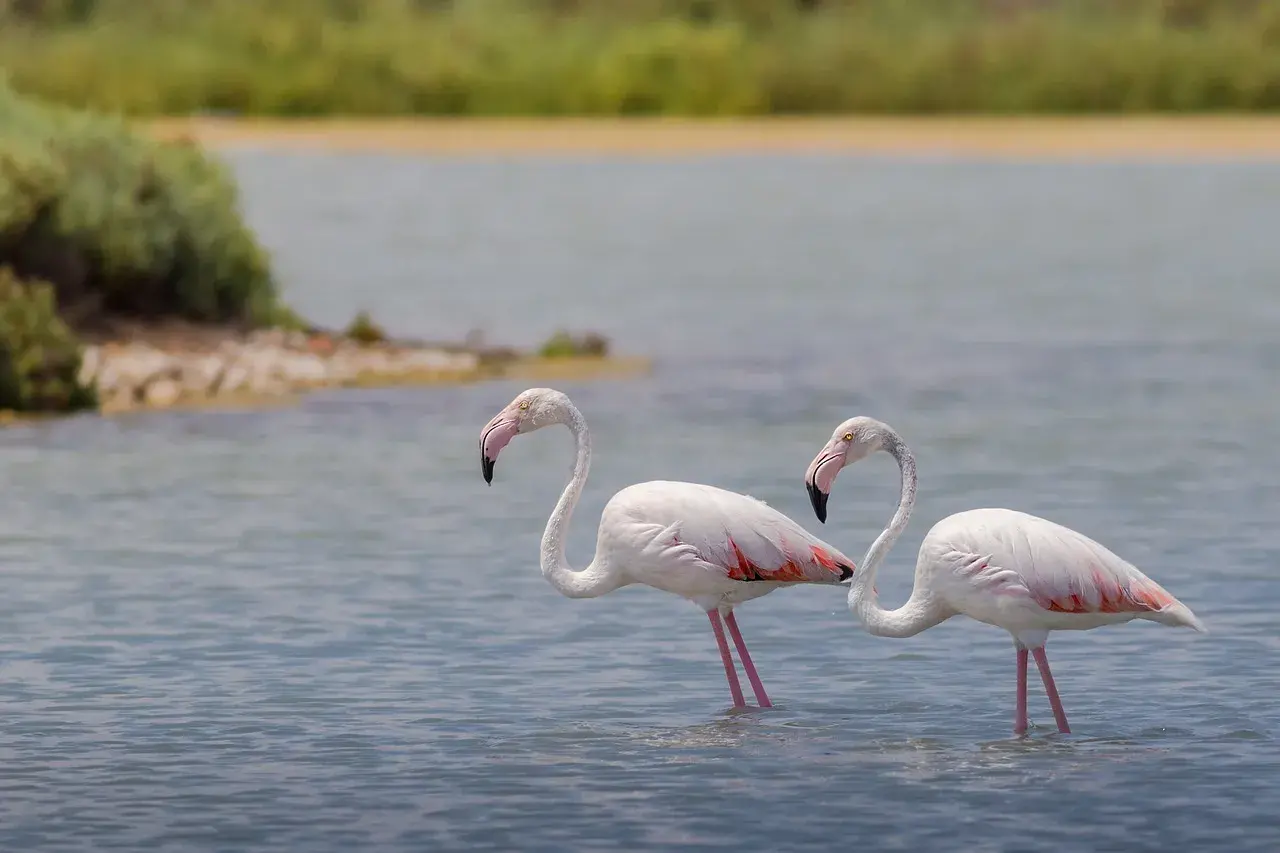
Descend 600 m into the Ngorongoro Crater — the world’s largest intact volcanic caldera. Inside the crater’s 260 km² floor you will find extraordinary concentrations of elephant, lion, rhino, hippo, flamingos, and resident wildebeest. After a game drive and a picnic lunch beside a hippo pool, ascend and cross into the Serengeti National Park for your first view of the vast golden plains. Late afternoon game drive before arriving at camp as dusk falls over the savannah.
Southern Serengeti — The Calving Grounds
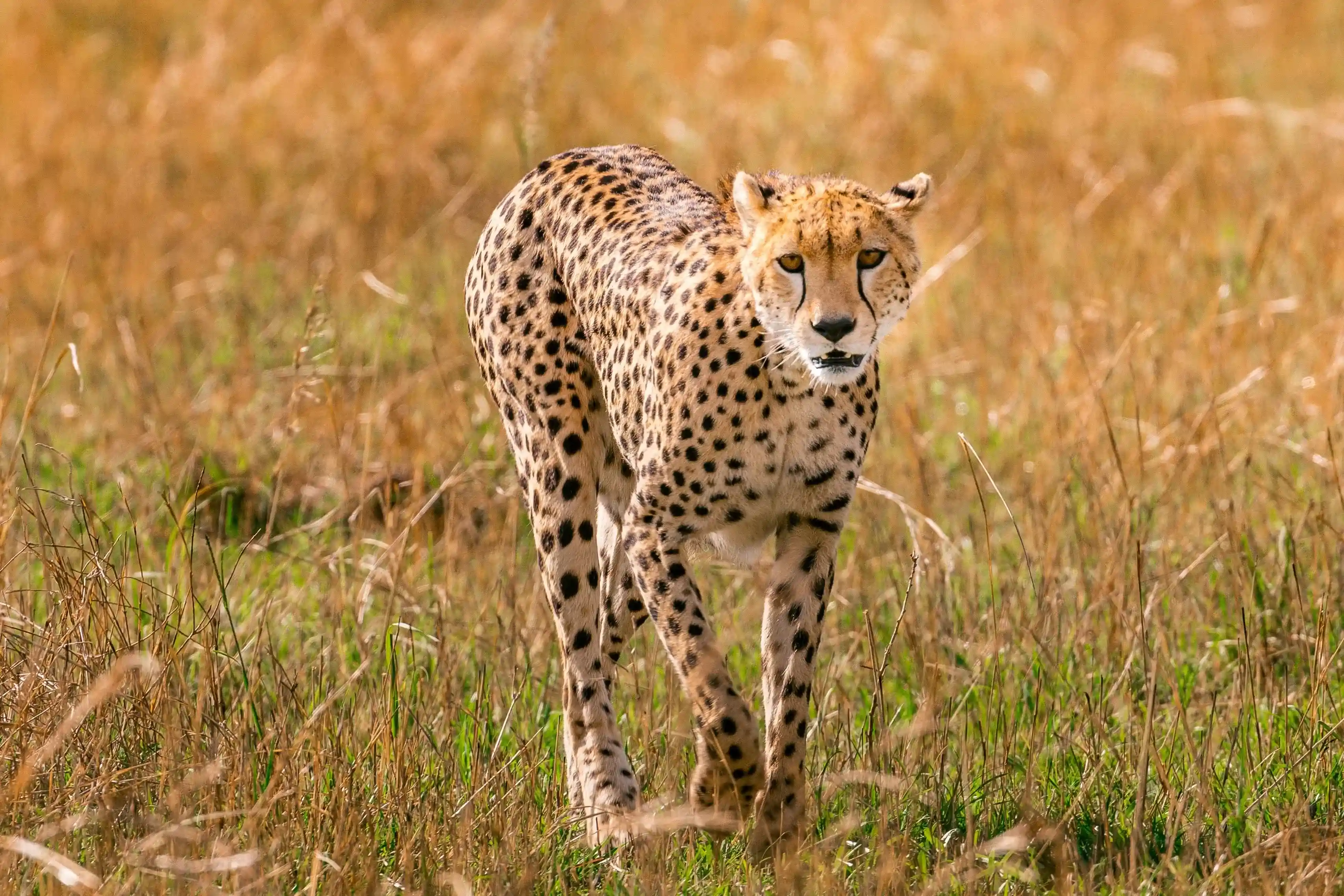
The short-grass plains of the Southern Serengeti are the nursery of the migration. From December to March, roughly 8,000 calves are born every single day — a bounty that draws cheetah, lion, wild dog, hyena, and jackal in extraordinary concentrations. Even outside calving season the southern plains offer vast, open savannah with superb visibility for big cat hunting. Your guide reads the landscape to position you ahead of action, whether that means a patient wait at a kopje or a fast drive across the open grass in pursuit of a hunting cheetah.
Seronera Valley — The Wildlife Crossroads
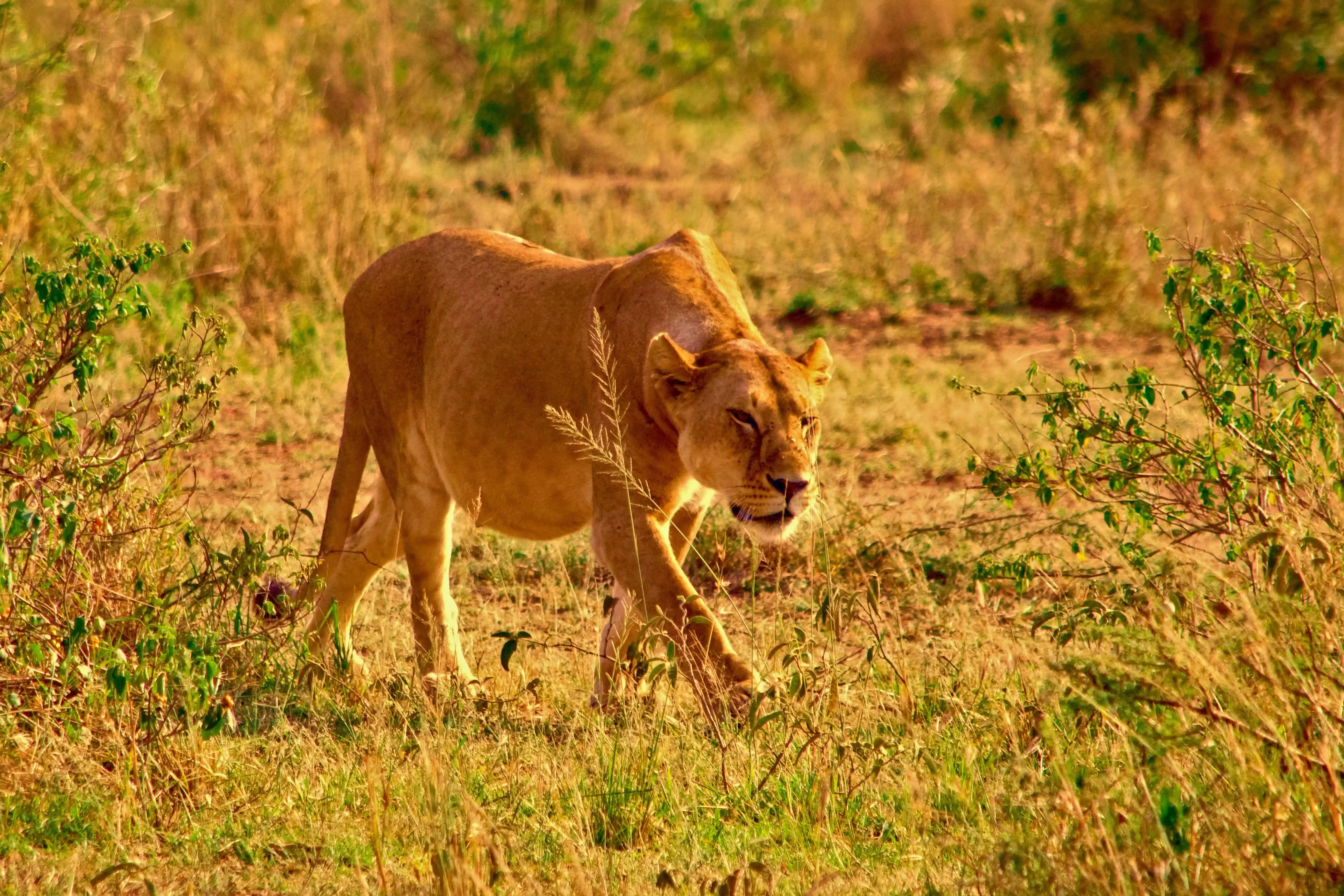
The Seronera Valley is the Serengeti’s wildlife crossroads — a permanent river system that draws animals even in the depths of the dry season. This is Tanzania’s finest leopard territory; the riverine fig and acacia trees along the Seronera and Orangi rivers are known for large, relaxed leopards that spend hours draped across branches. Buffalo herds, hippo, crocodile, and elephant also concentrate here. All-day game drives allow for the slow, patient style that catches the best behaviour.
Mara River — The Great Crossing
The Mara River crossings are among the most spectacular events in the natural world. From July to October, columns of wildebeest gather along the steep banks, sometimes waiting hours, sometimes surging forward without warning, as crocodiles thrash in the churning water below. Your guide positions you at a crossing point with time and patience, reading the herd’s behaviour to predict when a crossing will begin. Even on quieter days the northern Serengeti delivers extraordinary landscapes, large lion prides, and sundowner drinks at a scenic riverbank.
Return via Ngorongoro — Final Crater & Departure
Drive back through the Serengeti with a final morning game drive, then cross the Ngorongoro Conservation Area toward Arusha or Kilimanjaro. An optional second descent into the crater can be arranged for groups wanting more time with the rhino and flamingo. Alternatively, stop at a Maasai village or the roadside viewpoints over the crater for a final perspective on the landscapes you have crossed. Transfer to your airport, hotel, or onward destination — Zanzibar beach extensions are highly recommended.
What Makes This
Safari Different
We adjust your route based on your travel month. Calving season and crossing season demand completely different camps, roads, and timing — we plan each itinerary from scratch around the wildlife cycle, not a fixed template.
Your guide is with you every day — not shared, not rotating. They know the Serengeti intimately: the kopje where the cheetah sleeps, the crossing points where herds gather, the timing of the golden hour.
We stop when the light is right, position the vehicle for the best angle, and stay as long as the encounter lasts. Whether you shoot with a long lens or a phone, our guides work with you — not against a schedule.
Every lodge and camp in our recommended portfolio has been personally assessed. We prioritise position over brand — a well-placed tented camp on a river bend often outperforms a famous lodge on the wrong side of the park.
Visa guidance, packing lists, health and vaccination advice, flight connections, and a direct WhatsApp line to our team — you arrive prepared and supported from your first question to your final transfer.
We work with operators who employ local guides, support community conservancies, and follow ethical wildlife viewing codes. Travelling with us contributes directly to the conservation landscape you are experiencing.
Connected
Highlights
Everything You Need
to Know Before You Go
Most nationalities require a Tanzania tourist visa ($50 USD). The eVisa can be obtained online before travel at immigration.go.tz. We advise applying at least 3 weeks before departure. Yellow fever certificate may be required depending on your country of origin.
Recommended vaccinations include Hepatitis A & B, Typhoid, Tetanus, and Yellow Fever. Malaria prophylaxis is strongly advised for Tanzania. Consult your travel health clinic 6–8 weeks before departure for personalised advice.
Lightweight neutral-coloured clothing: khaki, tan, olive. Avoid blue and black (attract tsetse flies). A warm fleece for early morning drives. Comfortable walking shoes, sun hat, and a buff or neck gaiter. Formal wear is not needed.
A 300–500mm telephoto lens is ideal for wildlife. Bring extra batteries and memory cards — power is limited in remote camps. Golden hour delivers the best light. We factor photography stops into all game drive planning.
Tanzania’s currency is the Tanzanian Shilling (TZS). USD is widely accepted for tips and purchases. Bring clean USD bills dated after 2006. ATMs are available in Arusha. Credit cards are accepted at major lodges but not in the field.
Typical day: depart 06:30 for the early morning drive (most active wildlife period), return for late breakfast, optional midday rest, depart again at 15:30 for the afternoon/sundowner drive returning at dusk around 19:00. Schedules flex around wildlife activity.
Fly into Kilimanjaro International Airport (JRO). Major airlines connect via Nairobi, Addis Ababa, Doha, Dubai, and Amsterdam. Internal flights to the Serengeti (Seronera airstrip) are available and recommended for longer trips.
Mobile coverage is limited in the Serengeti and Ngorongoro. Most lodges offer Wi-Fi in main areas. We recommend downloading offline maps before departure. A local SIM (Vodacom or Airtel) purchased in Arusha provides basic connectivity on the road.
Accommodation-Based Pricing
Choose the travel style that fits your comfort level. Prices are listed per person in USD and vary by group size.
| Accommodation Type | 1 Person | 2 People | 3 People | 4 People | 5 People | 6 People |
|---|---|---|---|---|---|---|
| Camping | $3,010 | $2,310 | $2,030 | $1,820 | $1,680 | $1,575 |
| Midrange | $4,130 | $3,010 | $2,660 | $2,380 | $2,205 | $2,065 |
| Luxury | $5,950 | $4,550 | $4,060 | $3,640 | $3,430 | $3,220 |
Prices are listed per person in USD and may vary slightly depending on season, accommodation availability, park fee updates, and final customization.
Request Accurate QuoteWhat's Covered
Before You Travel
- Private expert guide throughout
- 4WD safari vehicle with pop-up roof
- All national park and conservation fees
- All accommodation as specified
- All meals during safari days
- Drinking water and game-drive snacks
- Airport transfers and pre-trip support
- International flights
- Tanzania visa fee
- Travel insurance
- Guide and camp staff gratuities
- Personal purchases and optional activities
Ready to plan?
Talk to our team.
Send your dates, group size, and travel style. We will build the route around the season and your pace — no generic packages, just a safari designed for you.