Kilimanjaro Template Reference
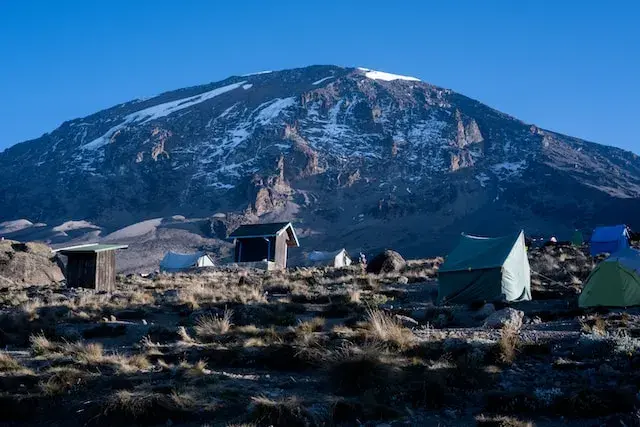
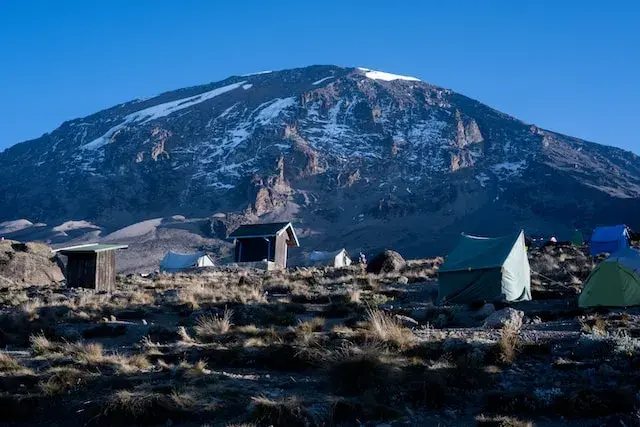
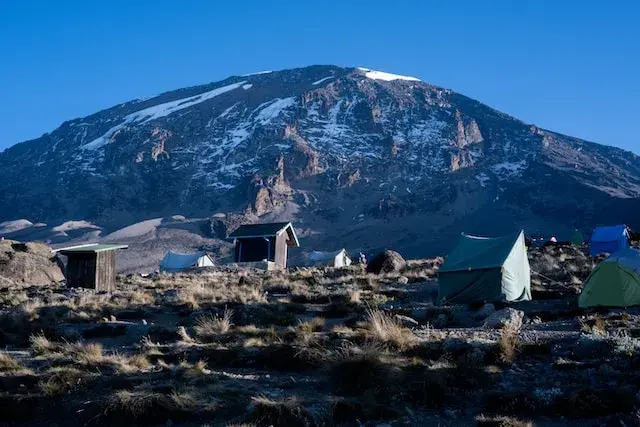
The Marangu Route is Kilimanjaro's oldest and most established trail, in use since the first recorded ascent of the mountain in 1889. Known informally as the "Coca-Cola Route" — a nod to its relative accessibility compared to the more remote western approaches — Marangu is the only route on Kilimanjaro that uses permanent hut accommodation at all three mountain camps. This means dry mattresses, communal dining halls, flush toilets at the lower camps, and a level of shelter from the elements that no other route can match. For climbers who prefer to travel without carrying a tent and sleeping kit, or for whom the social atmosphere of a mountain hut is part of the experience, Marangu is the natural choice.
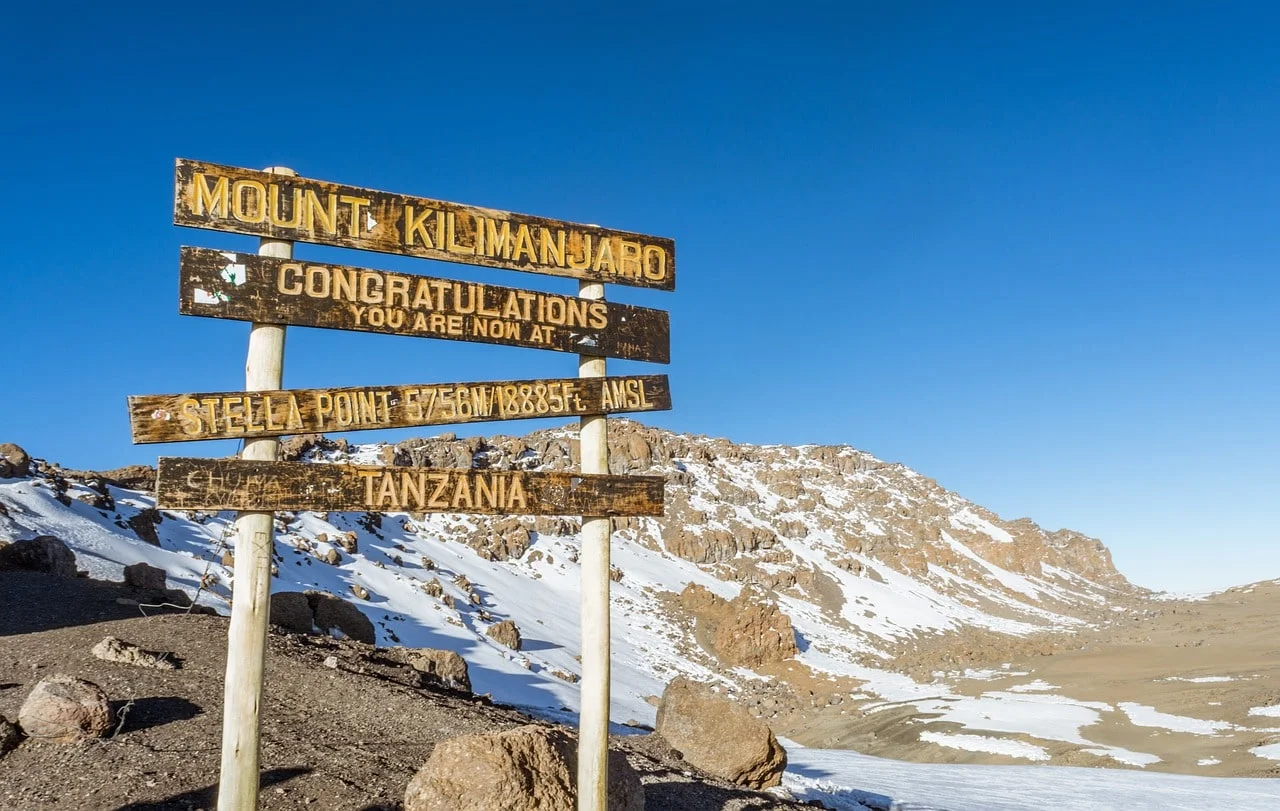
The route begins at Marangu Gate (1,830 m), just 45 minutes from Moshi town, and climbs steadily north-east through five distinct climate zones: cultivated farmland, montane rainforest, heather and moorland, high alpine desert, and finally the ice-cap summit zone of Kibo. The trail reaches Gilman's Point (5,756 m) on the crater rim before continuing around the rim to Uhuru Peak at 5,895 metres, the highest point in Africa and the tallest freestanding volcanic mountain on Earth.
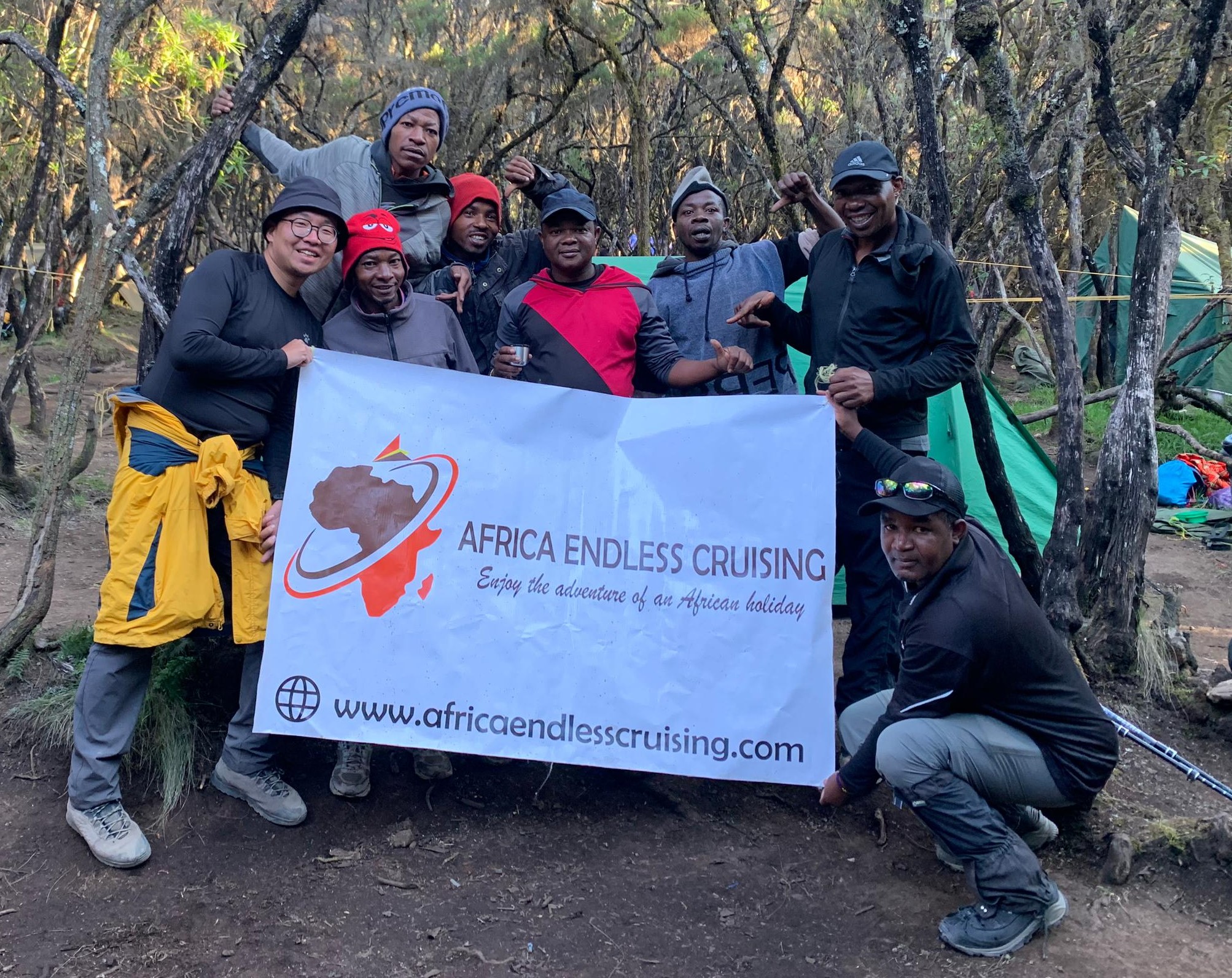
This 5-day itinerary — the standard Marangu schedule — gives you two nights at Horombo Hut (3,720 m) to acclimatize before the summit push, which departs from Kibo Hut (4,720 m) at midnight and times the summit arrival for sunrise. The descent retraces the ascent route all the way back to Marangu Gate, finishing in Moshi the same afternoon. Your Africa Endless Cruising team handles everything: a KINAPA-certified lead guide, assistant guides matched to group size, a mountain cook, and a full registered porter crew under our Fair Porter Policy.
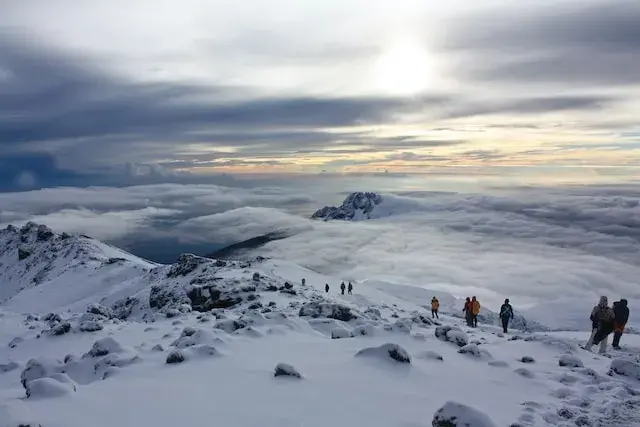
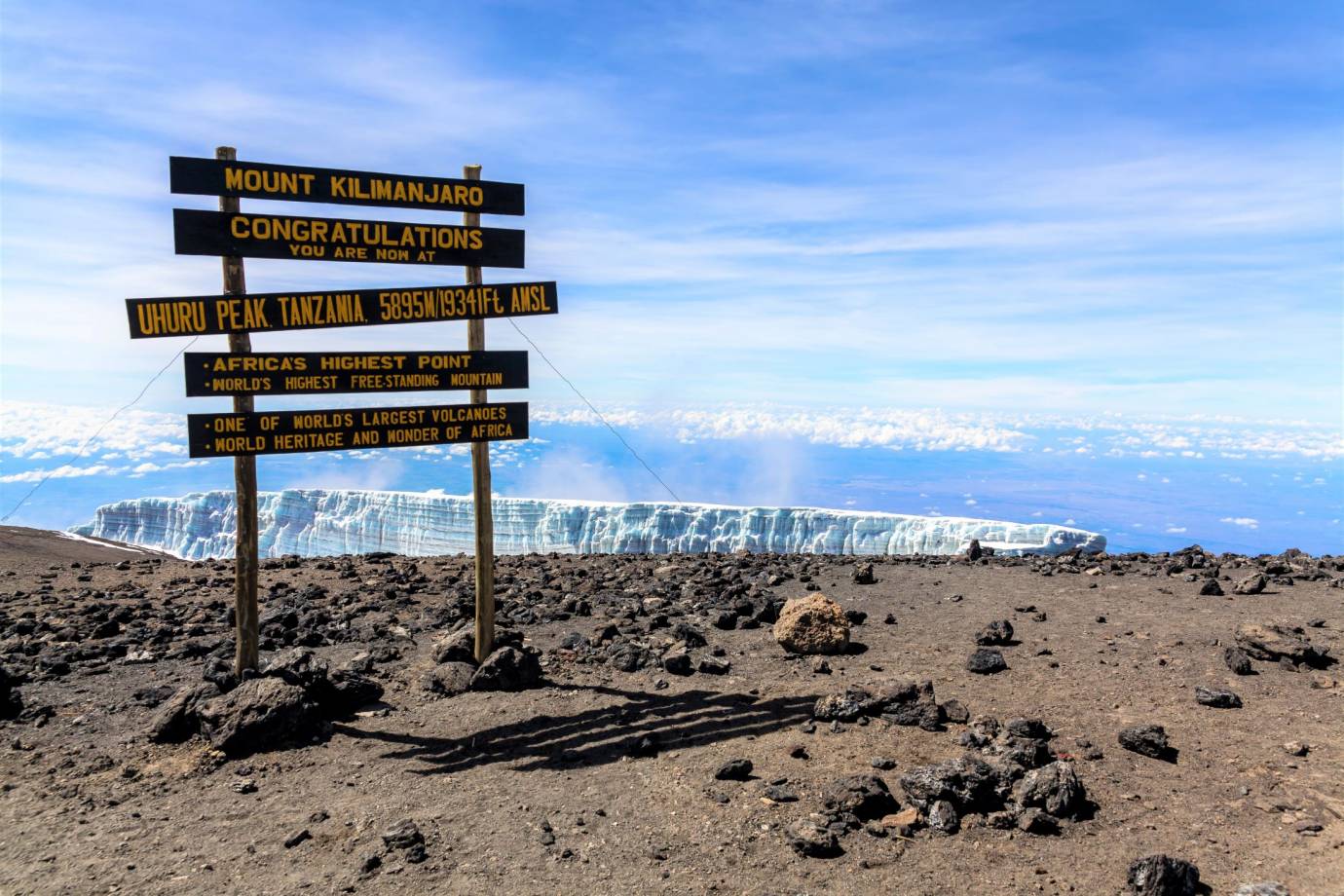
At 5,895 metres, Uhuru Peak on the rim of Kibo Crater is the highest point on the African continent and one of the Seven Summits. The views from the crater rim — across Tanzania, Kenya, and the Indian Ocean on a clear day — are among the most extraordinary in the world. The sense of standing on the roof of Africa, above the clouds, under a sky of impossible blue, is something that stays with climbers for the rest of their lives.
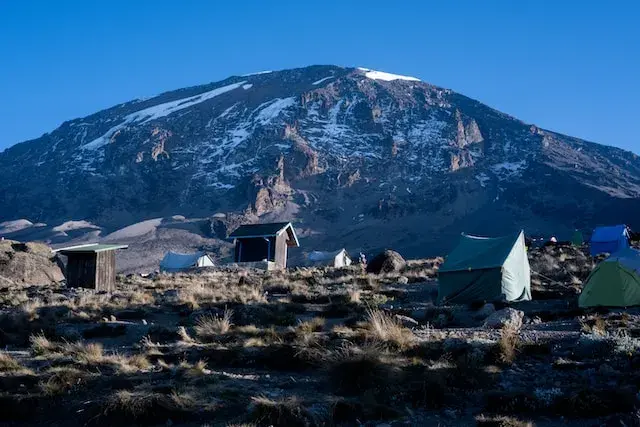
Marangu is unique among Kilimanjaro's seven routes in that permanent A-frame huts are provided at every camp — Mandara (2,720 m), Horombo (3,720 m), and Kibo (4,720 m). No tent to pitch, no sleeping bag to carry in your day pack. The huts provide dry, wind-proof shelter and hot meals in a communal setting, making Marangu the most forgiving and socially warm high-altitude experience on the mountain.
Kilimanjaro's vertical range is so extreme that climbing it is the ecological equivalent of trekking from the equator to the Arctic Circle. In five days on Marangu you pass through dense equatorial rainforest alive with Hartlaub's turacos and Guereza colobus monkeys; open moorland with giant heather and everlasting flowers; the stark alpine desert of the Saddle; and the glaciated arctic cap of Kibo — each zone as different from the last as if you had crossed an entire continent.
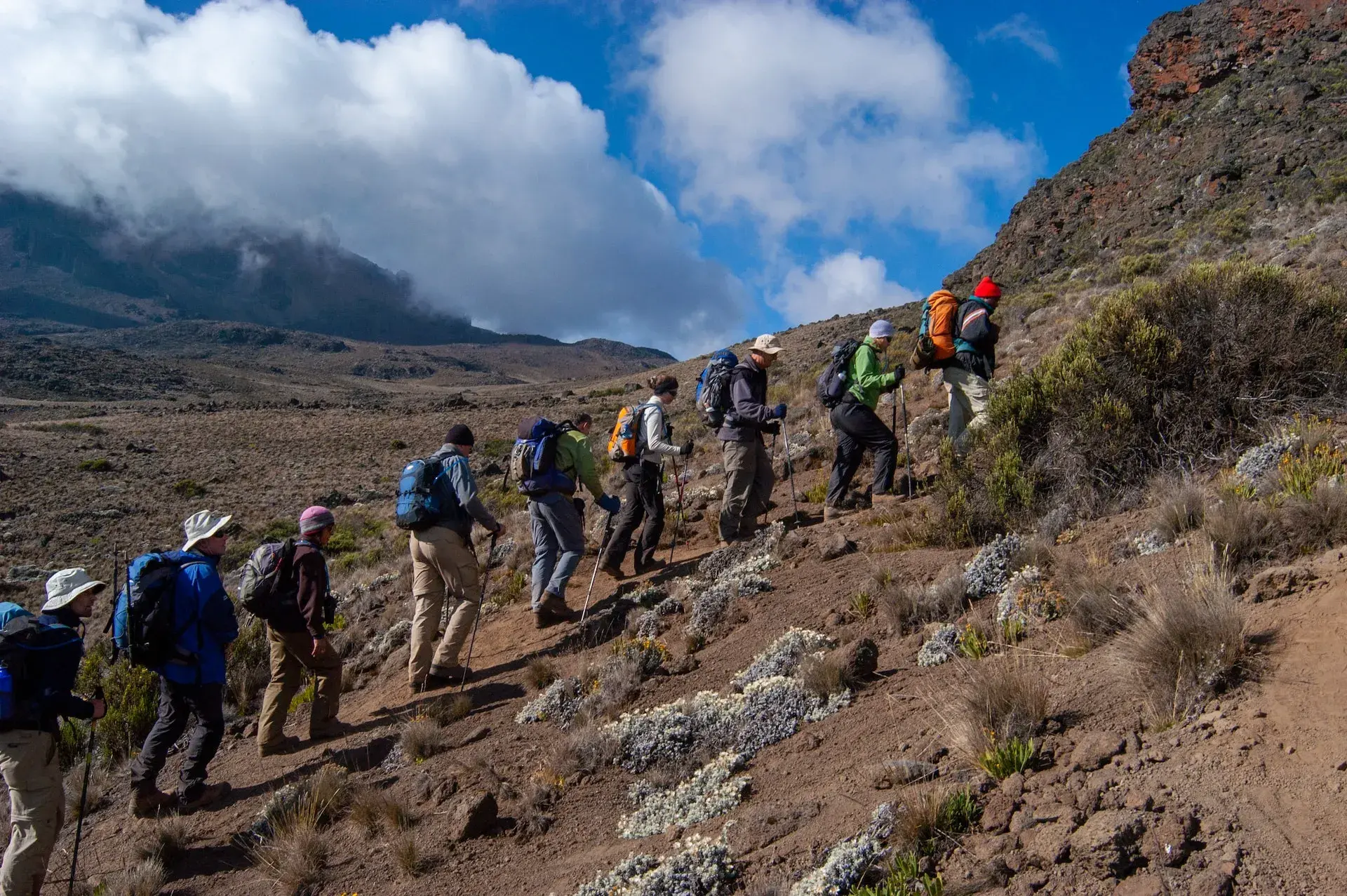
Unlike the steeper approaches of Machame or Umbwe, Marangu follows a long, steady ridge with a consistent gradient that experienced guides describe as "the most walkable path to the summit." There is no scrambling, no exposure, and no technical terrain — the challenge is entirely physiological. For climbers who are aerobically fit but new to high altitude, this is the most rational starting point for a Kilimanjaro attempt.
Every Africa Endless Cruising Kilimanjaro climb is fully private — your group, your guide, your schedule. Your lead KINAPA-certified guide conducts daily health checks at every camp using a pulse oximeterguest feedback oxygen saturation levels, and makes professional acclimatization decisions. A mountain cook prepares nutritionally designed altitude meals at every camp. All porters are employed under our Fair Porter Policy with regulated load weights, proper gear, and ethical wages.
The moorland and heath zones of Kilimanjaro support some of the most unusual plant life on the planet — giant groundsel (Senecio kilimanjari) trees that can live for a century and grow to six metres, giant lobelia (Lobelia deckenii) whose rosettes close at night to protect the growing tip from frost, and vast fields of Helichrysum everlasting flowers that carpet the hillsides above Horombo in silver and gold. Walking through this landscape feels genuinely otherworldly.
Is this climb right for me?
Tour Seasons & Pricing
| Season | 1 Person | 2 Persons | 3 Persons | 4 Persons | 5 Persons | 6+ |
|---|---|---|---|---|---|---|
| Low Season Jan-Mar / Nov-Dec | $1,600 | $1,700 | $1,500 | $1,450 | $1,450 | On Request |
| Shoulder Season Apr-May / Oct | $1,600 | $1,700 | $1,500 | $1,500 | $1,450 | On Request |
| Peak Season Jun-Sep / 20 Dec-10 Jan | $1,650 | $1,800 | $1,600 | $1,500 | $1,450 | On Request |
Prices are per person in USD and may vary by season, group size, availability, and route arrangements.
Day-by-Day Itinerary
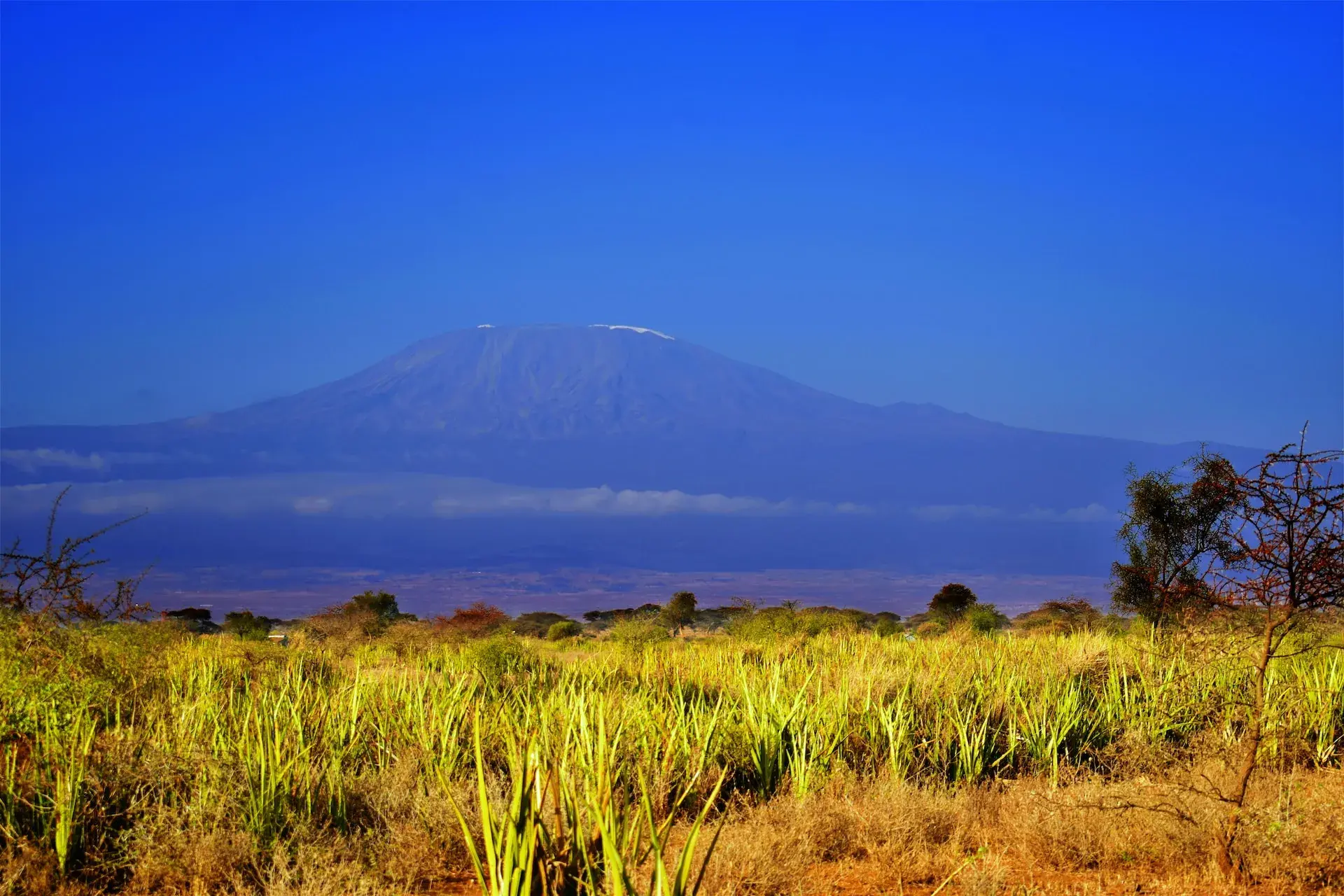
Your Kilimanjaro journey begins when you land at Kilimanjaro International Airport (JRO), midway between Arusha and Moshi. A Africa Endless Cruising driver will be waiting at arrivals with a sign, and the transfer to Moshi — a pleasant market town at the southeastern foot of the mountain — takes about 45 minutes along roads lined with coffee and banana plantations. On a clear arrival, the sheer scale of Kilimanjaro rising above the town is the first thing that puts the task ahead into perspective: a white-capped summit dome so vast it seems to occupy an entire quadrant of the sky.
After settling into your hotel, your lead guide joins you for the pre-climb briefing — an essential 60–90 minute session covering the route day by day, the acclimatization strategy, what to expect at altitude, mandatory gear review, and the daily health-check protocol. This is the moment to ask every question you have, raise any medical concerns, and understand clearly how your guide will manage the group's safety on the mountain. Guides who have summited Kilimanjaro hundreds of times know the physiological warning signs intimately — trust their judgment from the first evening.
The evening is yours. Moshi has excellent restaurants within easy walking distance of the main hotels — try the rooftop terrace at Kindoroko for grilled tilapia and a first view of the mountain at dusk, or the courtyard at Indo-Italian for something lighter. An early night is strongly encouraged: Day 1 on the trail begins with a 6:30 am departure from the hotel.
The drive to Marangu Gate (1,830 m) takes 45 minutes from Moshi, climbing steadily through the Kilimanjaro foothills past Chagga villages, coffee shambas, and banana groves. The Chagga people have farmed these slopes for centuries, cultivating one of the finest arabica coffees in East Africa in the volcanic red soil that drains from the mountain above. The gate itself is a busy, purposeful place on clear mornings — KINAPA rangers check permits and weigh porter loads while guides distribute day packs and the cook team organises the first day's lunch boxes.
Once inside the park boundary, the trail enters Kilimanjaro's montane rainforest almost immediately — and the transformation is immediate and complete. The canopy closes overhead in a cathedral of Hagenia, Podocarpus, and giant African violet trees; old-man's-beard lichen drapes every branch in pale silver; and the temperature drops five degrees in the first hundred metres. This forest receives over 2,000 mm of rain per year and is one of the most biologically rich ecosystems in East Africa. Listen for the liquid call of the Hartlaub's turaco, the crashing of Guereza colobus monkeys in the canopy, and the territorial song of the white-starred robin from the undergrowth.
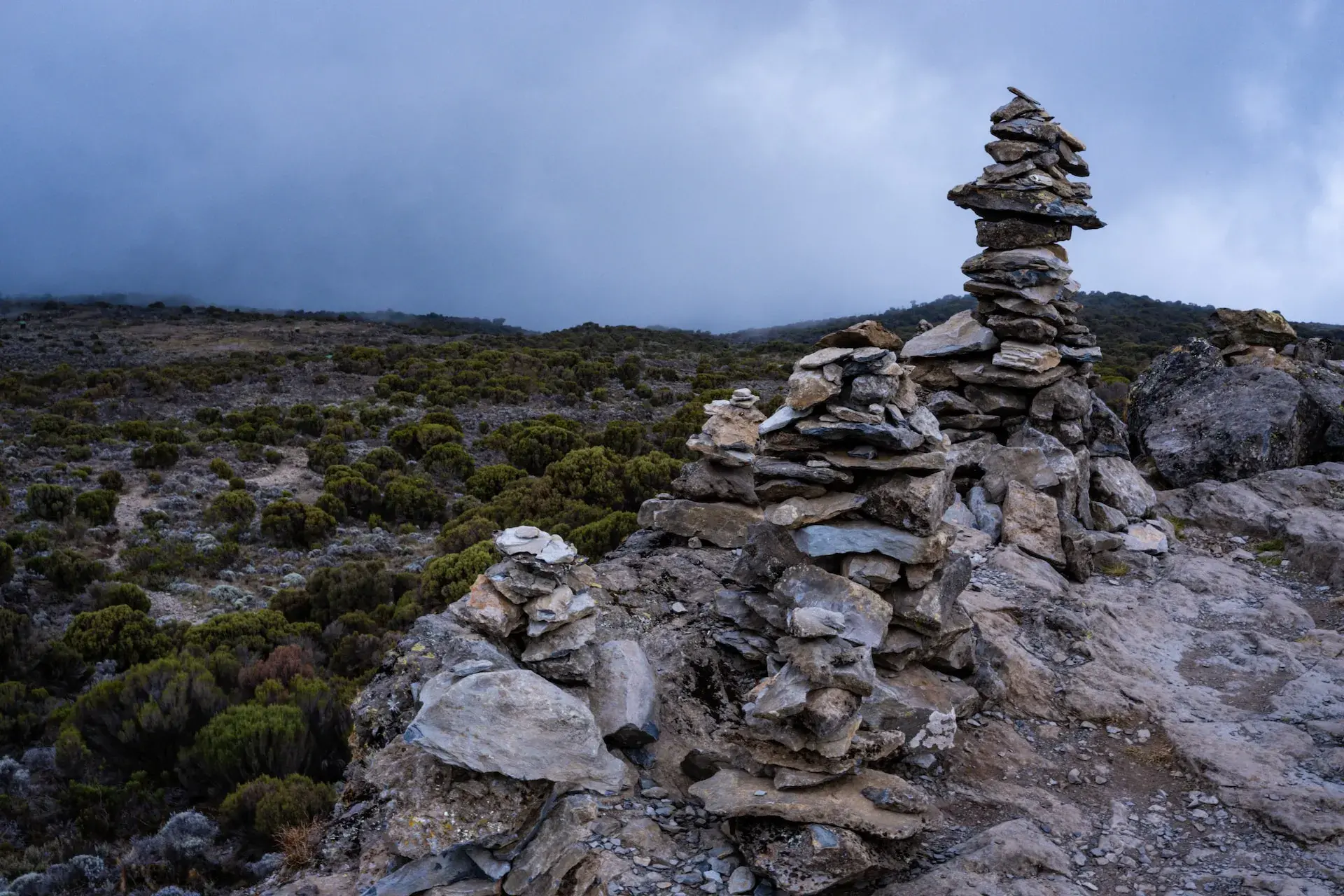
The trail is wide, clearly marked, and well-maintained — climbing at a steady, unhurried gradient along a broad ridge. Your guide sets the pace: slow and deliberate, with regular short stops to observe wildlife, drink water, and let the group breathe. On Kilimanjaro, the pace is everything. The Swahili phrase pole pole (slowly, slowly) is not just a pleasantry — it is the single most important principle of high-altitude trekking, and the guides live it. Rushing on Day 1 costs you on summit night.
Mandara Hut (2,720 m) appears in a small forest clearing after about four hours of walking. The camp is a cluster of cheerful A-frame wooden huts set on raised platforms, with a large communal dining hall, flush toilets, and a tap with running water. After your cook serves a hot three-course dinner, your guide conducts the evening health check: pulse rate, oxygen saturation reading with a pulse oximeter, and a conversation about how each person is feeling. Any headache or unusual fatigue at this altitude is noted and monitored. Sleep here is usually good — 2,720 m is well within the comfort zone for most people.
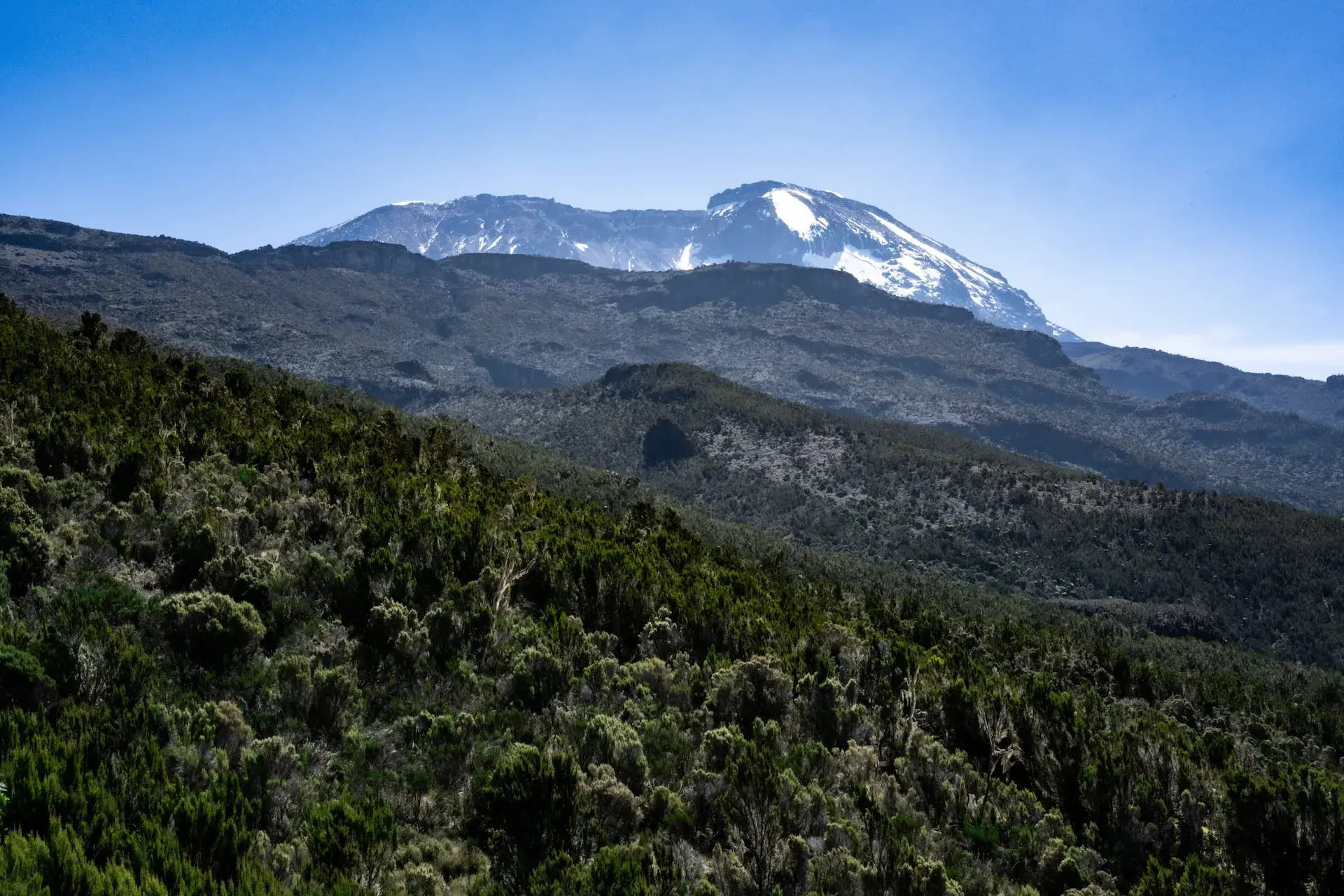
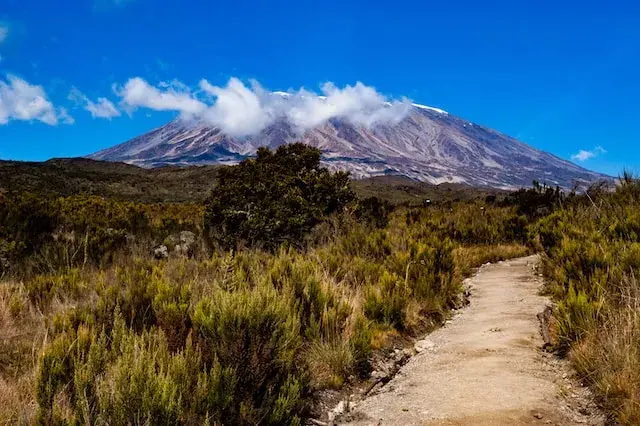
Day 2 is the great visual revelation of the Marangu Route. The trail climbs out of the upper forest edge and within 30 minutes the trees give way to the heather zone — open, rolling hillsides of giant tree heather (Erica arborea and Erica trimera) that can grow to five metres, draped in silver-grey lichen. The sky opens suddenly and for the first time you can see both the upper mountain and the Tanzanian lowlands simultaneously: Moshi far below through the haze, and Kibo's white dome — close enough now to make out individual glacier faces — directly ahead. This is the moment most climbers describe as the one where the mountain becomes real.
Above the heather, the moorland opens into one of Kilimanjaro's most photogenic landscapes. The giant groundsel (Senecio kilimanjari) begins to appear — prehistoric-looking tree plants that evolved in isolation on East Africa's high peaks and grow nowhere else on Earth. They can live for over a hundred years, their cabbage-like rosettes arranged on top of bare woody trunks, surrounding a growing tip that closes itself at night like a fist to protect the tissue from the -5°C frost. Walking among them feels like walking through a Cretaceous landscape. Giant lobelias (Lobelia deckenii) appear further up the slope, their tall flower spikes surrounded by water-trapping rosette leaves — another extraordinary evolutionary adaptation to the extreme daily temperature swings of equatorial high altitude.
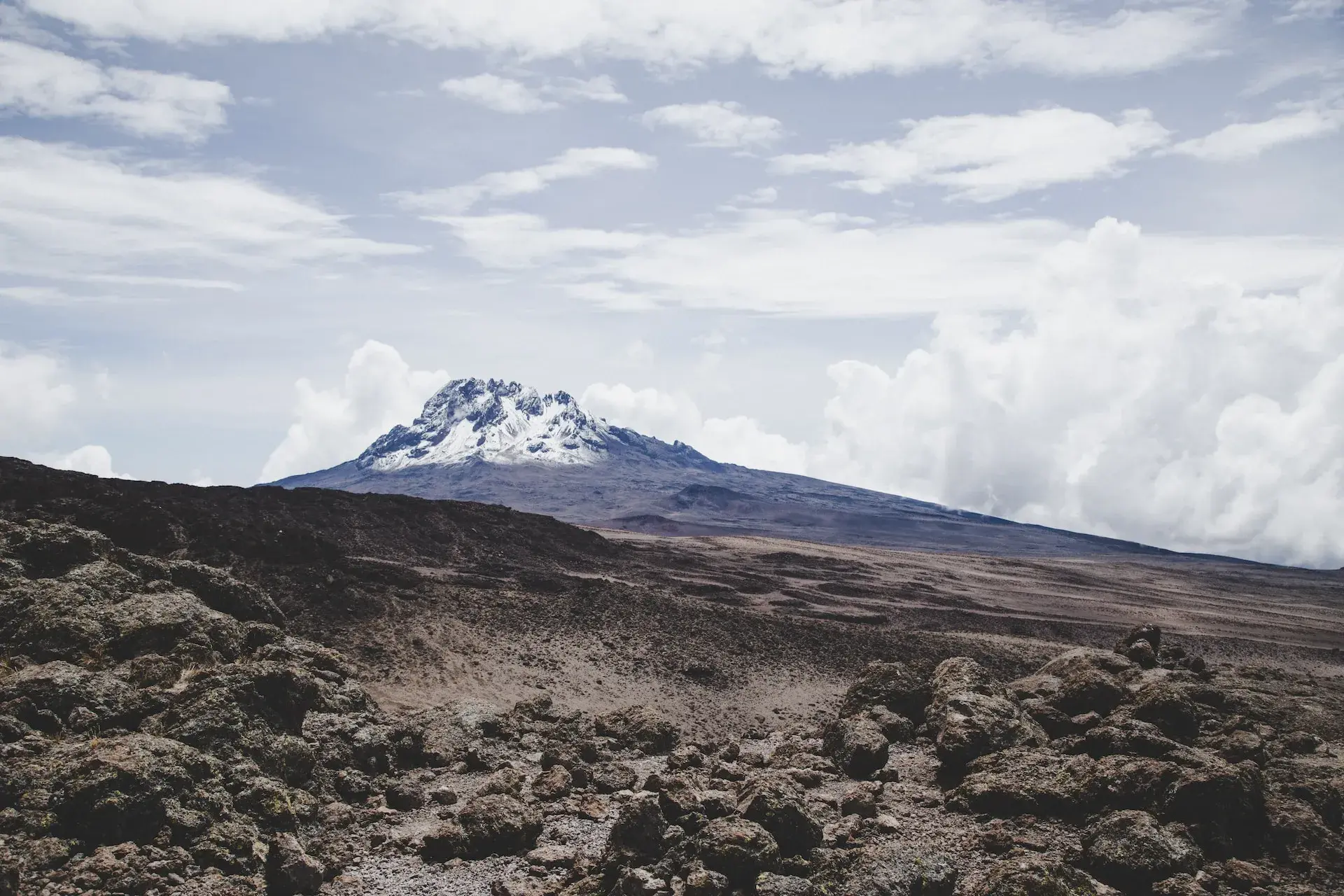
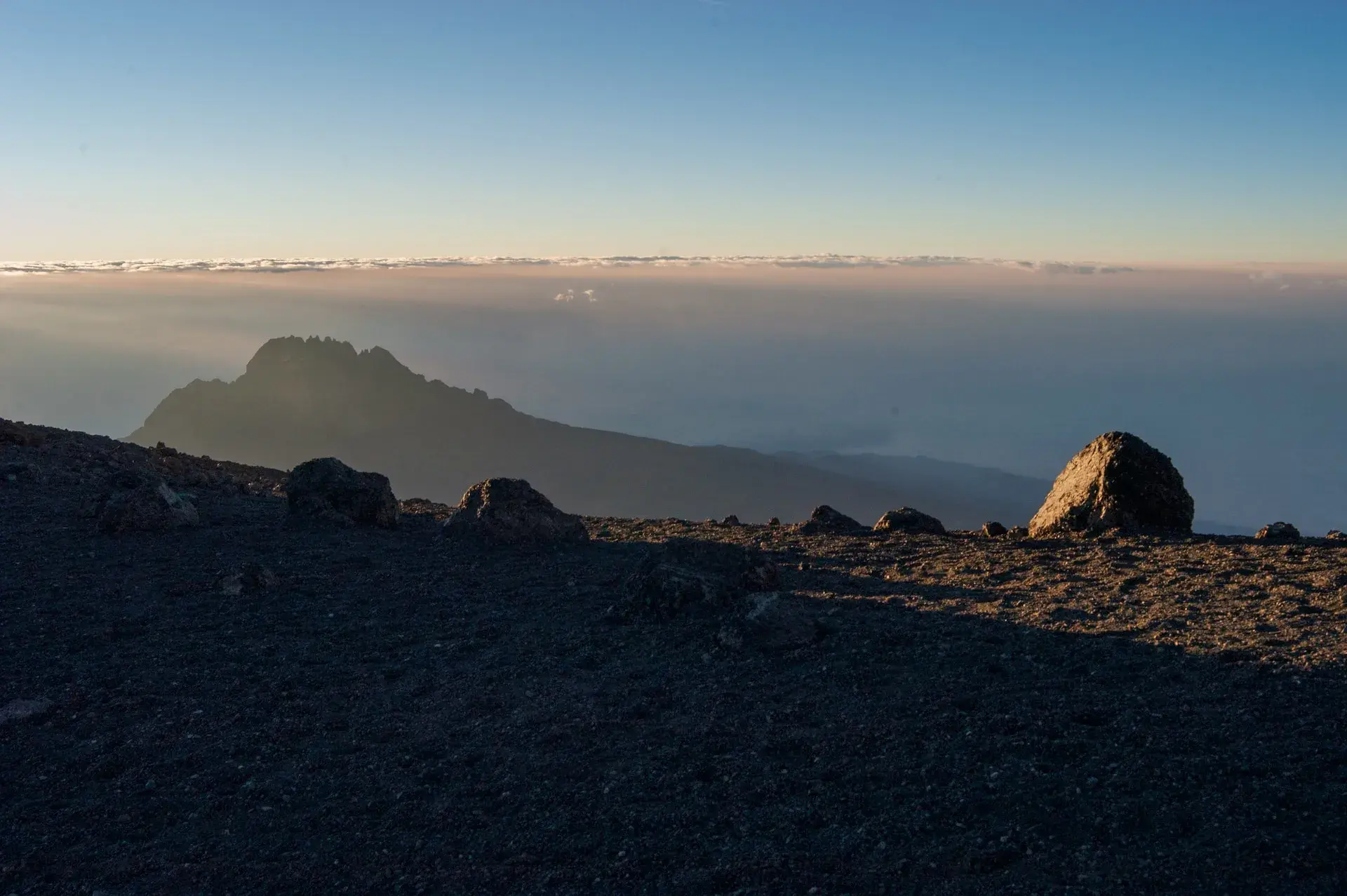
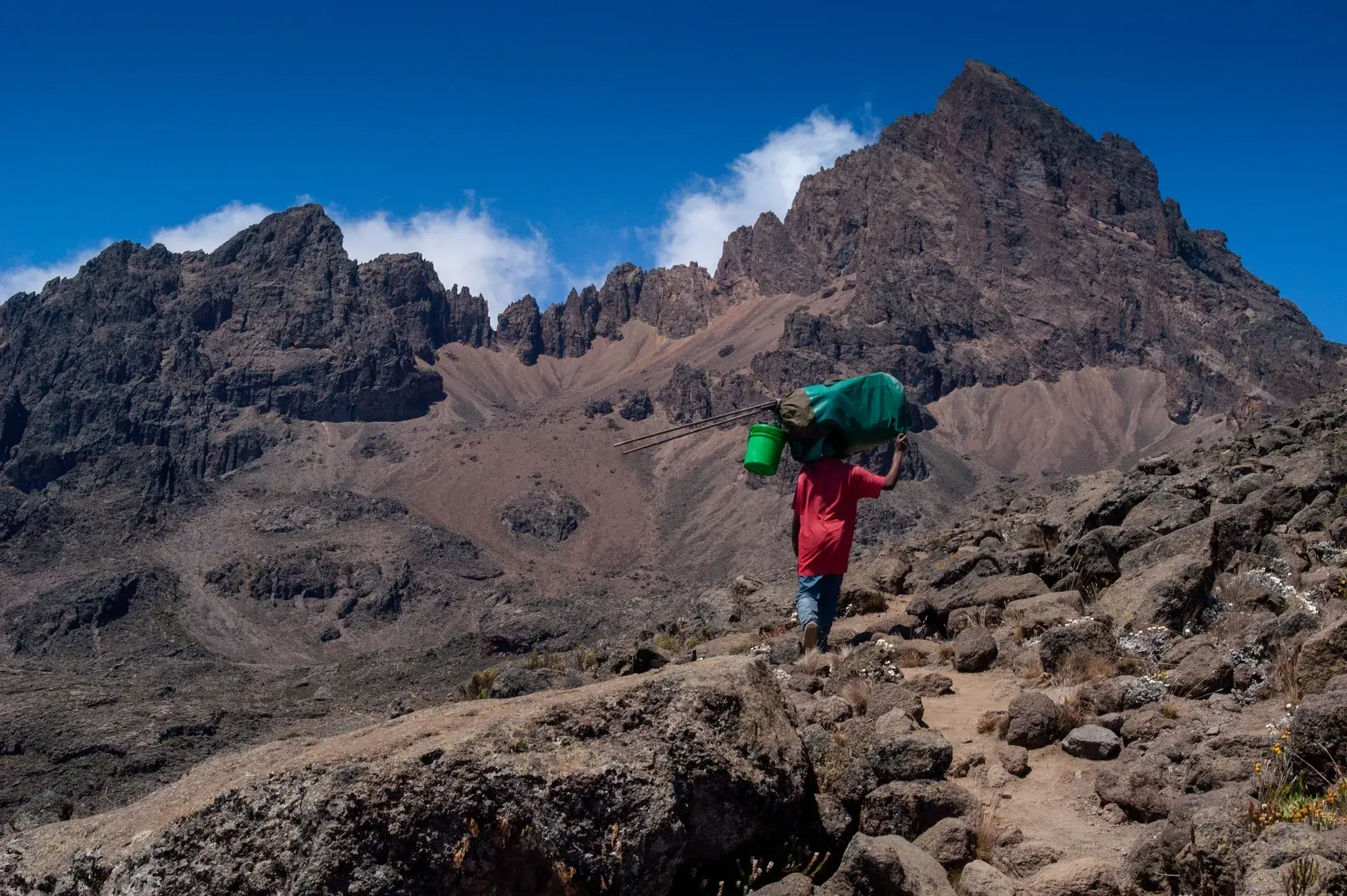
Your guide will call a proper lunch stop at one of the viewpoints along the Eastern Ridge, where on clear days the Mawenzi peak to the east comes into view — a jagged, eroded volcanic plug in dramatic contrast to Kibo's smooth dome. Mawenzi (5,149 m) is Kilimanjaro's second summit and a technically difficult climb that very few people attempt. From the Marangu trail, it looms dramatically over the moorland to your right for most of Day 2 and Day 3.
Horombo Hut (3,720 m) is Marangu's main camp and the most substantial of the three hut stations — a sprawling collection of A-frame huts on a wide moorland plateau with unobstructed 360° views. You can see the entire ascent route from here, from the forest below to the summit icefield above. After dinner, your guide conducts the evening health check and discusses the following day — a rest and acclimatization day that keeps you at Horombo while your body adjusts to the altitude. Most climbers feel a mild headache this first night at 3,720 m; drink two litres of water before sleep and take it seriously.
The acclimatization day is the most underestimated component of the 5-day Marangu itinerary — and, according to most experienced Kilimanjaro guides, the single most important factor in summit success. Your body needs time at 3,720 m to begin producing additional red blood cells, which transport oxygen to muscles and organs. Spending a second night at Horombo without ascending dramatically improves the physiological adaptation necessary to function at Kibo Hut (4,720 m) and above.
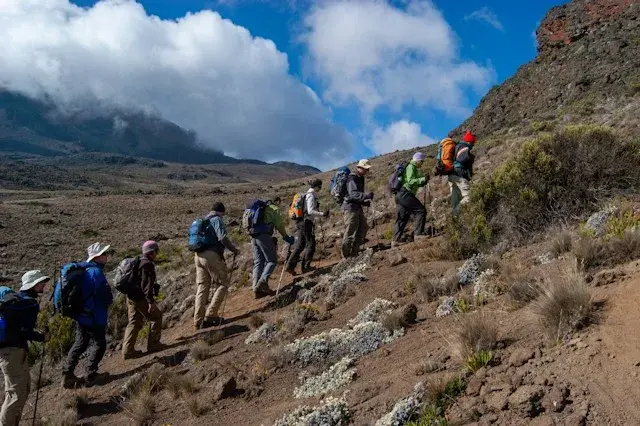
The day's programme follows the classic "climb high, sleep low" principle — a morning hike up to Zebra Rocks, a dramatic lava formation at approximately 4,000 m named for the striking black-and-white mineral banding on their faces, caused by water percolating through the volcanic rock over millennia. The hike takes about 2–3 hours return and is worth every step for the views: the entire south face of Kibo is visible above you, and on a clear morning the shadow of the mountain stretches south across Tanzania for hundreds of kilometres. You gain 300 metres, give your body the higher altitude stimulus it needs, then descend back to Horombo to sleep at 3,720 m.
The afternoon is genuinely free — use it to rest, read, reorganise your summit pack, drink as much fluid as possible, and eat a full high-carbohydrate dinner. Your guide will hold an extended summit briefing in the evening, going through the exact schedule of the following two days in detail: departure time from Kibo Hut (midnight), the expected timeline to Gilman's Point, the route to Uhuru Peak, the descent all the way to Horombo, and then the full walk-out to Marangu Gate the next morning.
Health checks tonight are the most thorough of the climb. Your guide will record your SpO₂ (oxygen saturation) reading carefully — a reading below 70% at rest at this altitude is a sign that warrants a serious conversation. Most climbers who are well-hydrated, have eaten properly, and are not over-exerting themselves will register 75–85% at 3,720 m, which is normal. Anyone showing signs of progressive AMS — worsening headache, nausea, loss of coordination, altered consciousness — will be descended immediately. This is a non-negotiable safety protocol, and the guides enforce it without exception.
Beyond Horombo, the mountain changes character completely and with remarkable abruptness. Within half an hour of leaving camp you cross the Last Water point — the highest reliable water source on the Marangu Route — and then enter the Saddle: a vast, desolate high plateau stretching between Mawenzi's jagged eastern peaks and Kibo's vast glaciated dome to the west. The Saddle sits at roughly 4,200–4,500 metres and receives almost no precipitation — just fierce UV radiation by day and plunging temperatures by night. Almost nothing grows here. The ground is volcanic scree, black rock, and dust, and the trail ahead is visible for several kilometres at a time — a pale line across an empty landscape that looks more like the surface of Mars than anything you've seen in the past three days.
The altitude is genuinely felt here for the first time by most climbers. Walking pace slows. Breathing becomes deliberate. Your guide maintains constant verbal contact, checking in with each person, watching for the subtle physiological tells of altitude that experience makes legible. The pace must be slow — not just comfortable-slow, but uncomfortably-slow for fit people. The golden rule: if you feel you could easily go faster, slow down. Your goal is not to reach Kibo Hut efficiently — it is to arrive there without having depleted your reserves.
As you approach Kibo, the scale of the mountain becomes overwhelming. The summit ice-cap is directly overhead now, close enough to hear — on quiet mornings, you can sometimes catch the deep crack and boom of thermal expansion in the glaciers above. The final approach to Kibo Hut crosses a boulder field before the stone huts appear: functional, wind-blasted, and deeply reassuring.
Kibo Hut (4,720 m) is austere by design. Stone-walled dormitory rooms with narrow bunk beds and thin mattresses, a basic toilet block, and a small dining room where your cook will have a high-carbohydrate dinner ready immediately on arrival — usually a large pasta or rice dish with soup, and as much hot tea and water as you can drink. The instruction is clear: eat everything in front of you, drink two litres of water before attempting sleep, lay out all your summit clothing in the correct order, set your head torch to hand, and be horizontal by 7 pm. Your guide knocks at midnight. Everything between now and then is simple: rest, eat, hydrate, rest.
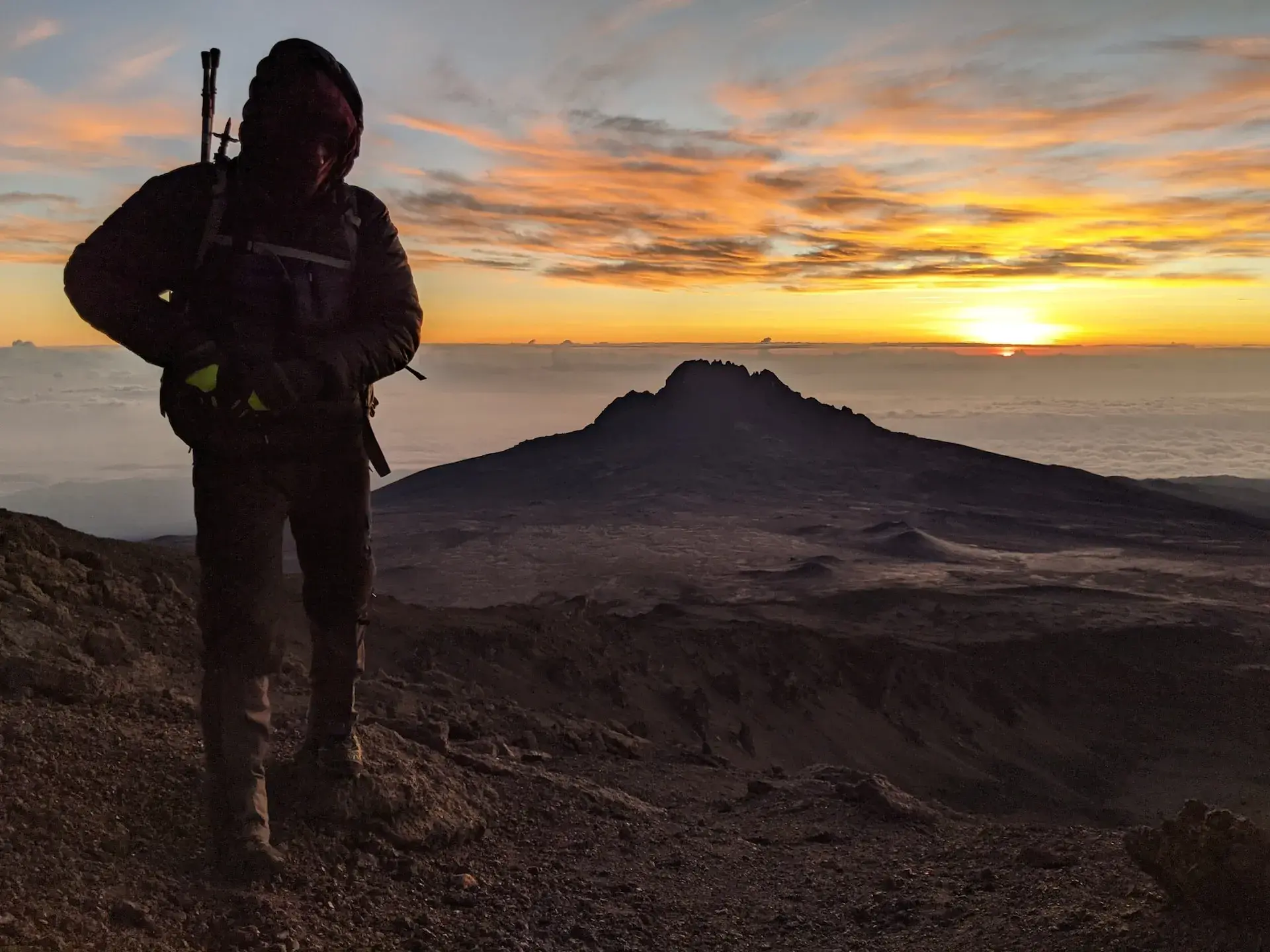
At midnight, the guide's knock arrives in the dark. Temperatures at Kibo Hut drop to between −10°C and −20°C on the summit night, and the wind above can cut through any inadequate layering with brutal efficiency. You dressed your summit layers in the correct order before sleeping — base layer, mid layer, down jacket, windproof outer shell, insulated trousers over hiking trousers, balaclava, two pairs of gloves (liner and outer), gaiters, and two pairs of socks. Head torch on. The guide hands you a hot flask of tea. You step outside into a sky so full of stars it takes a moment to locate the horizon.
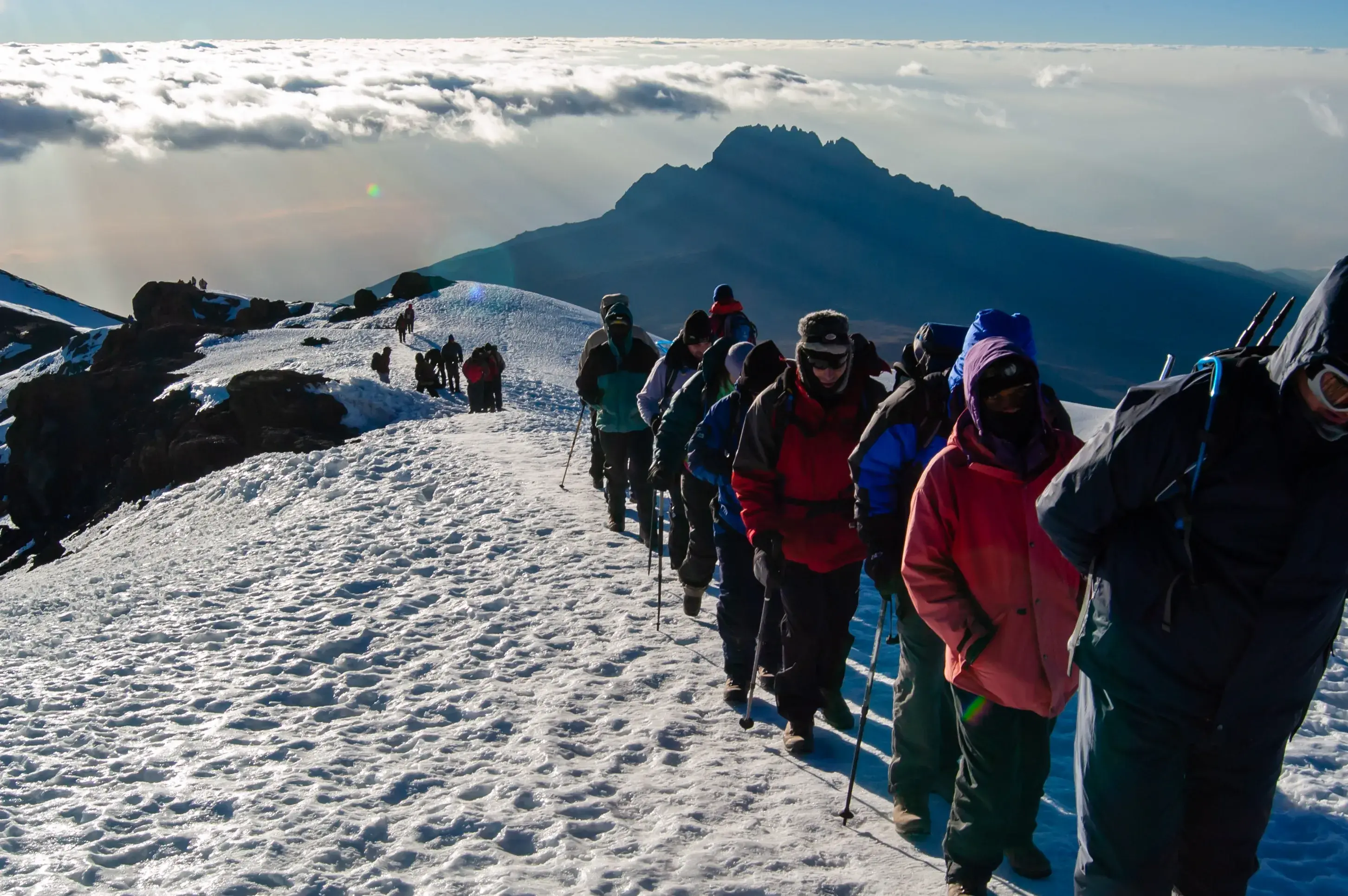
The ascent from Kibo to Gilman's Point (5,756 m) on the crater rim is the hardest section of the Marangu Route — a steep, loose scree face climbed in long switchbacks, one careful step at a time. At this altitude the oxygen partial pressure is roughly 50% of sea level. Your guide keeps the pace to something approaching a controlled shuffle — so slow it seems almost possible to fall asleep while walking, except that every fourth or fifth step requires a deliberate pause to breathe. The stars wheel slowly above. Headlamp beams trace slow arcs across the scree. Time becomes elastic and strange.
Hans Meyer Cave (5,150 m) provides a brief shelter stop — the guide checks in with everyone, handing out glucose tablets and checking for any signs of HACE (High Altitude Cerebral Edema) or severe HAPE (High Altitude Pulmonary Edema). Anyone showing coordination problems, severe confusion, or persistent vomiting must descend — the guide will send an assistant down with that person while continuing with the rest of the group. This is the moment when the mountain separates those who can continue from those who cannot, and neither outcome carries any shame. Altitude sickness is physiological, not a measure of fitness or willpower.
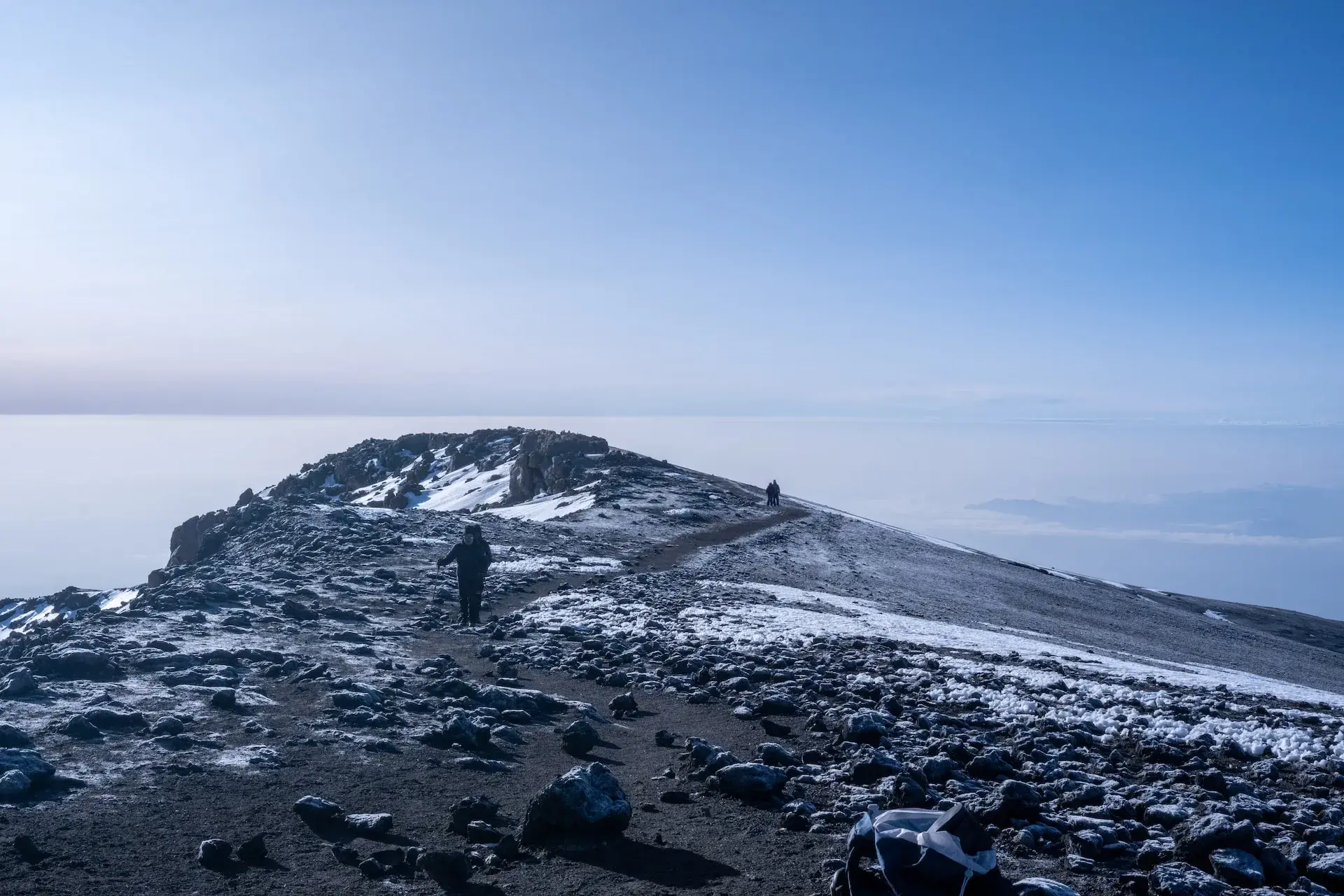
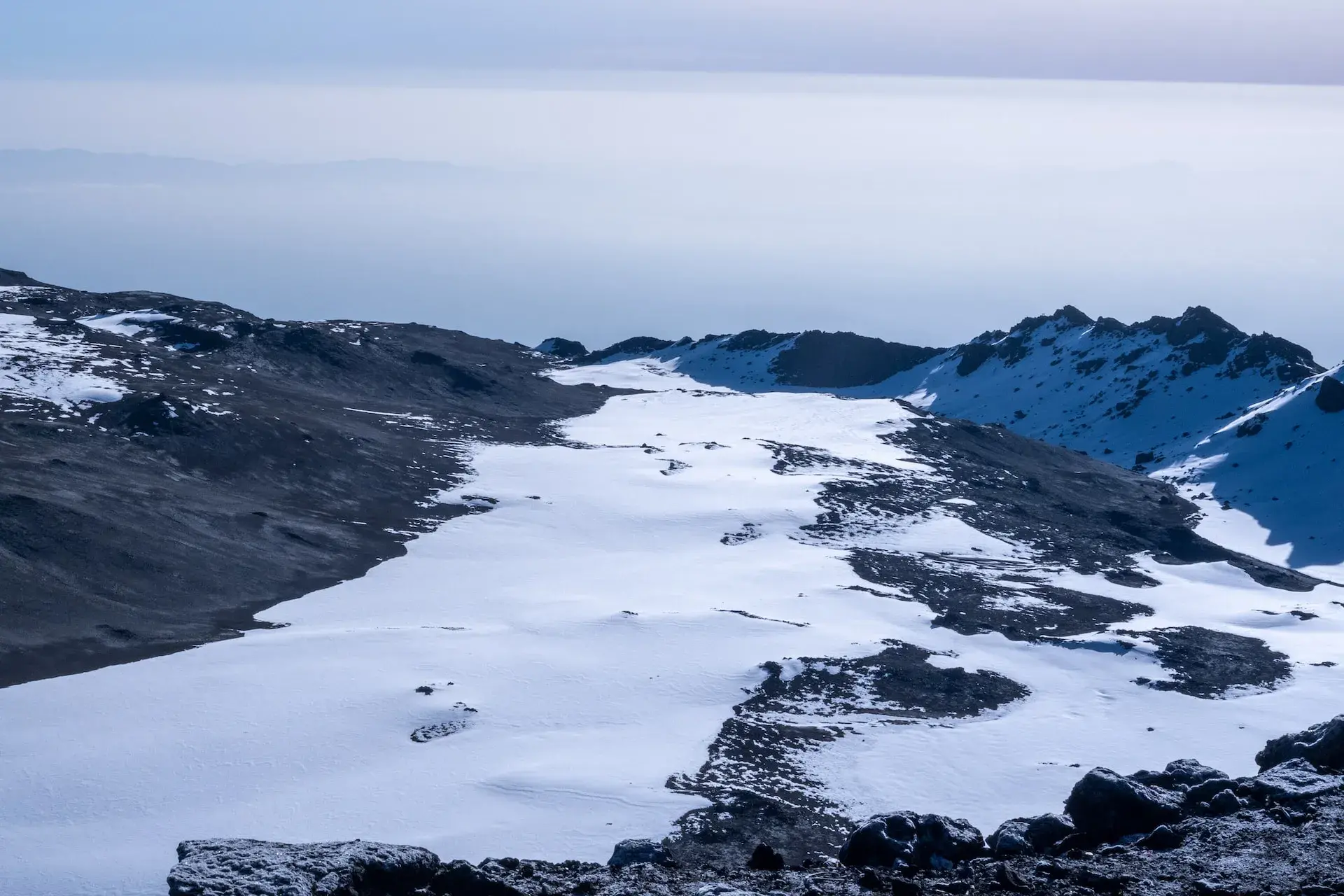
Gilman's Point appears as a wooden post set in loose rock on the crater rim — and when you pull yourself up to it, the world opens. The crater of Kibo stretches ahead of you: a vast volcanic caldera filled with the ancient Furtwängler Glacier, ice walls glowing blue in the pre-dawn dark, and the inner Ash Pit — the sleeping volcano's actual vent — at the far end. You are on the roof of Africa. The official crater-rim certificate can be awarded at Gilman's, but the summit is not finished.
The trail from Gilman's follows the crater rim west-southwest for approximately 45 minutes to Uhuru Peak (5,895 m). This section is less steep but the altitude is now at its maximum — every step feels deliberate, every breath shallow but purposeful. The sky begins to lighten over Kenya to the east as you walk the rim. The glaciers catch the first light and turn pale gold. And then, quite suddenly, there it is: the green and yellow summit sign, the glacier wall behind it, and the greatest view that East Africa offers — a cloud sea stretching to every horizon, far below, lit in the orange fire of an equatorial sunrise.
Your guide photographs you at the sign. Take your time — there is no rush from this moment. The summit is yours. Most groups spend 15–30 minutes at Uhuru Peak before the cold and the altitude make a continued stay impractical. Then the descent begins — and it is long, steep, and relentless but exhilarating. The loose scree that was so laborious to climb now allows a fast, skidding downward pace. Most groups cover the 1,175 m back to Kibo Hut in 2–3 hours. A hot breakfast from the cook. Then down again: all the way through the Saddle, through the moorland, through the heather, back through the rainforest — the full 20 km from Kibo to Marangu Gate completed in a single extraordinary afternoon.
At Marangu Gate, KINAPA rangers record your descent time. The porters line up in a traditional farewell circle — your guide introduces each team member by name, and this is the moment to thank and tip them individually. These are remarkable men and women who have carried extraordinary loads so that you could focus entirely on the summit. The 10 minutes spent acknowledging them properly is one of the most moving rituals of the whole experience. Then into the vehicle, back toward Moshi, your Kilimanjaro summit behind you and a hot shower ahead.
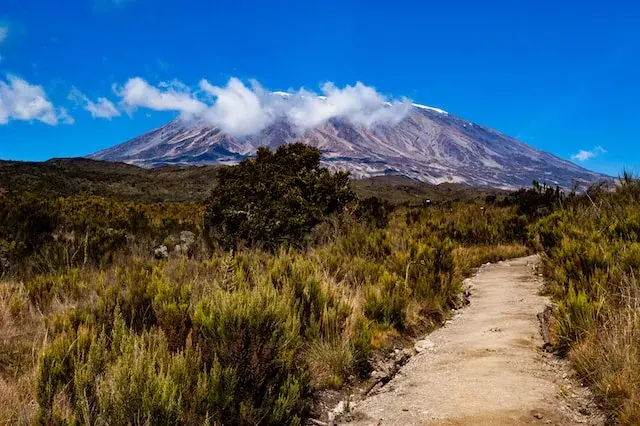
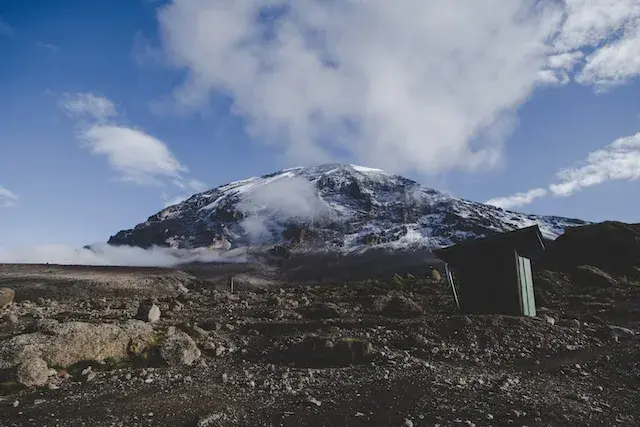
The final morning in Moshi is yours to enjoy at a pace that feels luxurious after the mountain. Sleep in. Take a slow breakfast on the hotel terrace. If it's a clear morning, Kilimanjaro will be visible above the town — and looking up at that summit, knowing you were standing on it yesterday, is a deeply satisfying moment that will take a while to fully believe.
Your private transfer to Kilimanjaro International Airport (JRO) departs timed precisely to your flight — no rushing, no stress. Our team coordinates luggage collection, hotel checkout, and your onward journey so that the logistics are invisible. If your flight is not until evening, your hotel room is yours until a late checkout by arrangement. Moshi is also worth a final half-day if time allows: the old town market, the Kilimanjaro Coffee Estate tour, or simply an espresso made from beans grown on the slopes you just climbed.
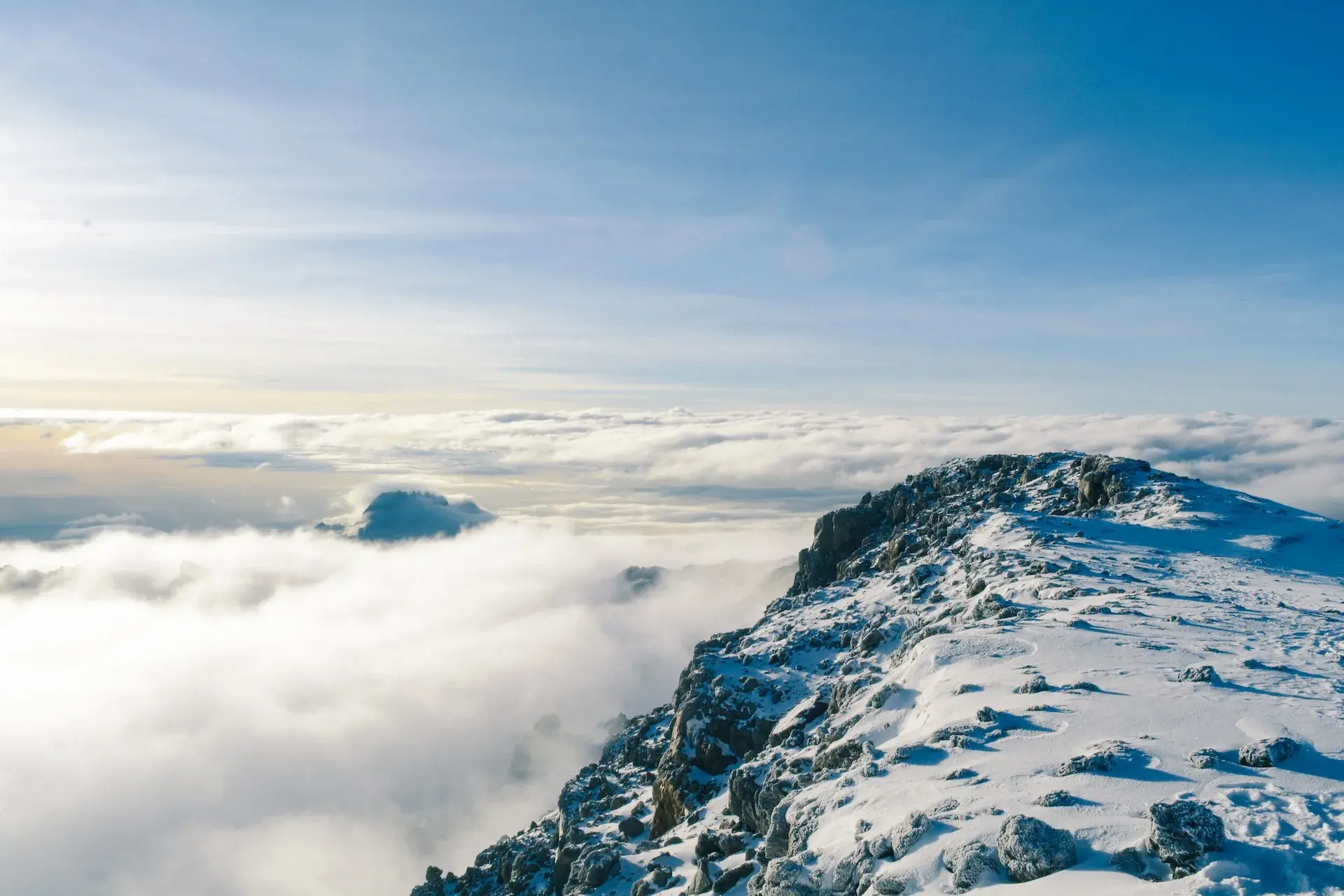
Gate to glacier — one route, five climate zones, the roof of Africa.
What's Included & Excluded
Included in Your Climb
Your lead guide holds a current, active Kilimanjaro National Park Authority (KINAPA) guiding licence and has a minimum of 8 years' experience on the mountain. All Africa Endless Cruising Kilimanjaro guides are Wilderness First Aid certified and carry supplemental oxygen for emergencies.
- Daily pulse-oximeter health checks at every camp (morning and evening)
- Fluent English; Swahili and basic German/French available on request
- Supplemental oxygen cylinder carried on all climbs above Horombo
- Stretcher and emergency evacuation coordination authority
- One assistant guide per 3 climbers (larger groups receive more)
Each climber is allocated a personal porter for their main duffel bag (max 15 kg). All group equipment — food, cooking gear, emergency supplies — is carried by additional registered porters. A dedicated mountain cook prepares all meals on-mountain. Every porter on a Africa Endless Cruising climb is registered with KINAPA, carries a maximum regulated load, is provided with proper warm equipment for the altitude, and is paid under our Fair Porter Policy — a wage structure above the Kilimanjaro Porters Assistance Project minimum. You are encouraged to meet your porter team on the first morning at Marangu Gate.
All Kilimanjaro National Park entrance fees, hut accommodation fees (Mandara, Horombo, Kibo), crew camping fees, and the mandatory KINAPA Rescue Fund levy are pre-paid in full and included in your tour price. There are no additional charges at the gate and no surprise fees during the climb.
All hut fees and bedding at Mandara Hut (2,720 m), Horombo Hut (3,720 m), and Kibo Hut (4,720 m) are included. Marangu is the only Kilimanjaro route with permanent hut facilities — bunk beds with mattresses, communal dining halls, and toilet facilities at each camp. You do not need to carry a sleeping bag if you bring your own; if not, a sleeping bag rated to −15°C can be rented through Africa Endless Cruising in Moshi.
Your mountain cook provides a hot breakfast, packed or hot lunch, and a three-course dinner at every camp — Mandara, Horombo, and Kibo. Meals are high-calorie, high-carbohydrate, and nutritionally designed for altitude performance. Dietary requirements (vegetarian, vegan, gluten-free, halal) are catered for with advance notice. Unlimited hot drinks (tea, coffee, cocoa, ginger water) are available at every camp throughout the day.
One night's hotel accommodation in Moshi before the climb (arrival night) and one night on descent (Day 5 return) are both included in the tour price. The hotel is a comfortable, centrally located property with en-suite rooms, hot water, luggage storage for bags left during the climb, and a terrace with Kilimanjaro views on clear mornings. Dinner is included on the arrival night; breakfast and celebration dinner are included on the descent night.
Return private vehicle transfers between Kilimanjaro International Airport (JRO) and your Moshi hotel, and between Moshi and Marangu Gate (both ascent and descent days), are included. Vehicle is a clean, air-conditioned 4×4 or minivan depending on group size.
All climbers who reach Gilman's Point (5,756 m) on the crater rim receive a Gilman's Point certificate. Those who continue to Uhuru Peak (5,895 m) receive the full Uhuru Peak summit certificate — printed on high-quality paper, signed by KINAPA, and dated with your summit day. These are presented by your guide at the Marangu Gate on descent, and are available in framed versions through Africa Endless Cruising on request.